Shower & Tub Care
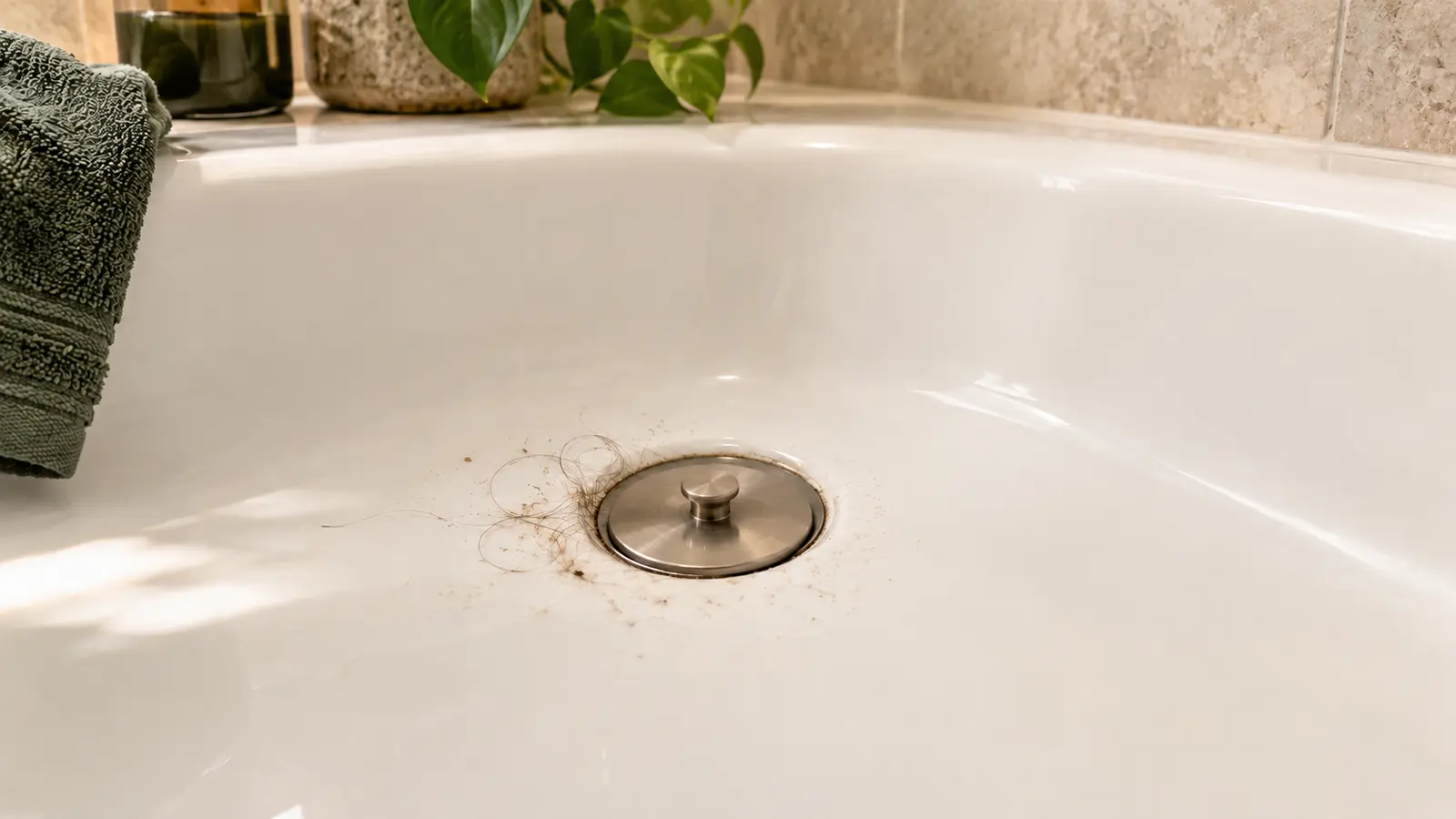
Learning how to clean a bathtub drain safely means separating routine surface care from a deeper plumbing blockage. This guide shows how to remove accessible hair, address odor and minor slow flow, protect the tub finish and recognize the point where DIY work should stop.
How to clean a bathtub drain safely
First confirm no chemical opener is present. Protect the tub finish, remove the stopper only as its manual allows, lift accessible hair with a non-scratching drain tool, wash reachable residue with mild soap, rinse with compatible warm water, reassemble, dry the trim and test the flow.
That method is appropriate for routine bathtub drain cleaning and a minor slowdown caused by debris near the opening. It is not a universal fix for standing water, a deep obstruction, a damaged stopper linkage, a leaking drain or a sewer-line problem.
Are you cleaning the drain or unclogging it?
Cleaning removes reachable hair, soap residue and film; unclogging addresses an obstruction deeper in the line. The first job is suitable for careful household maintenance. The second may require model-specific disassembly, a plunger, overflow access, a cable or a plumber.
Routine cleaning
Water drains normally or only slightly slowly, and debris is visible near the stopper.
Minor slow flow
Water still drains, but accessible hair or residue may be restricting the opening.
Full blockage
Standing water remains or the tub will not drain. Stop treating this as routine cleaning.
Possible system issue
Gurgling, repeated clogs, sewer odor or another backed-up fixture needs plumbing diagnosis.
Diagnose the symptom before choosing a method
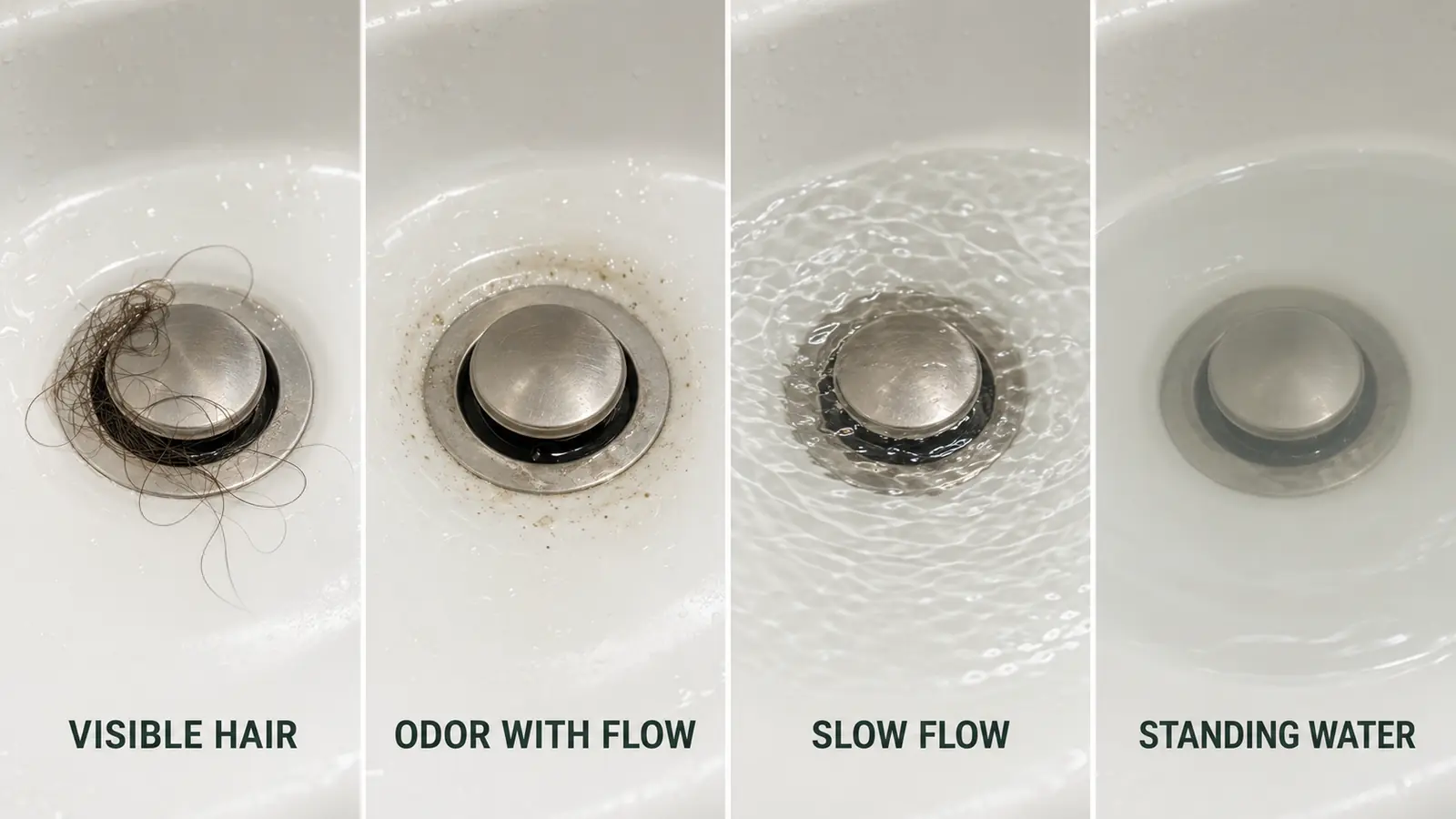
| What you observe | Likely first concern | Best first move | Stop condition |
|---|---|---|---|
| Visible hair at the opening | Accessible physical debris | Lift it with a flexible, purpose-made nonmetal tool | Tool meets hard resistance or catches linkage |
| Odor but normal flow | Residue on the stopper or reachable drain wall | Clean accessible parts with mild soap and warm water | Sewer-like odor persists or returns quickly |
| Slow but continuing flow | Hair or residue near the opening | Mechanical cleaning, reassembly and a timed flow test | No meaningful improvement |
| Standing water | Deeper or complete obstruction | Stop routine cleaning and arrange appropriate clog service | Immediately—especially if chemicals were used |
| Dark seam, damp ceiling or leak below | Drain seal, overflow or plumbing leak | Stop using the tub and inspect professionally | Immediately |
| Gurgling or another fixture backs up | Branch line, vent or sewer problem | Call a licensed plumber | Do not add more cleaner |
Identify the bathtub stopper before removing anything
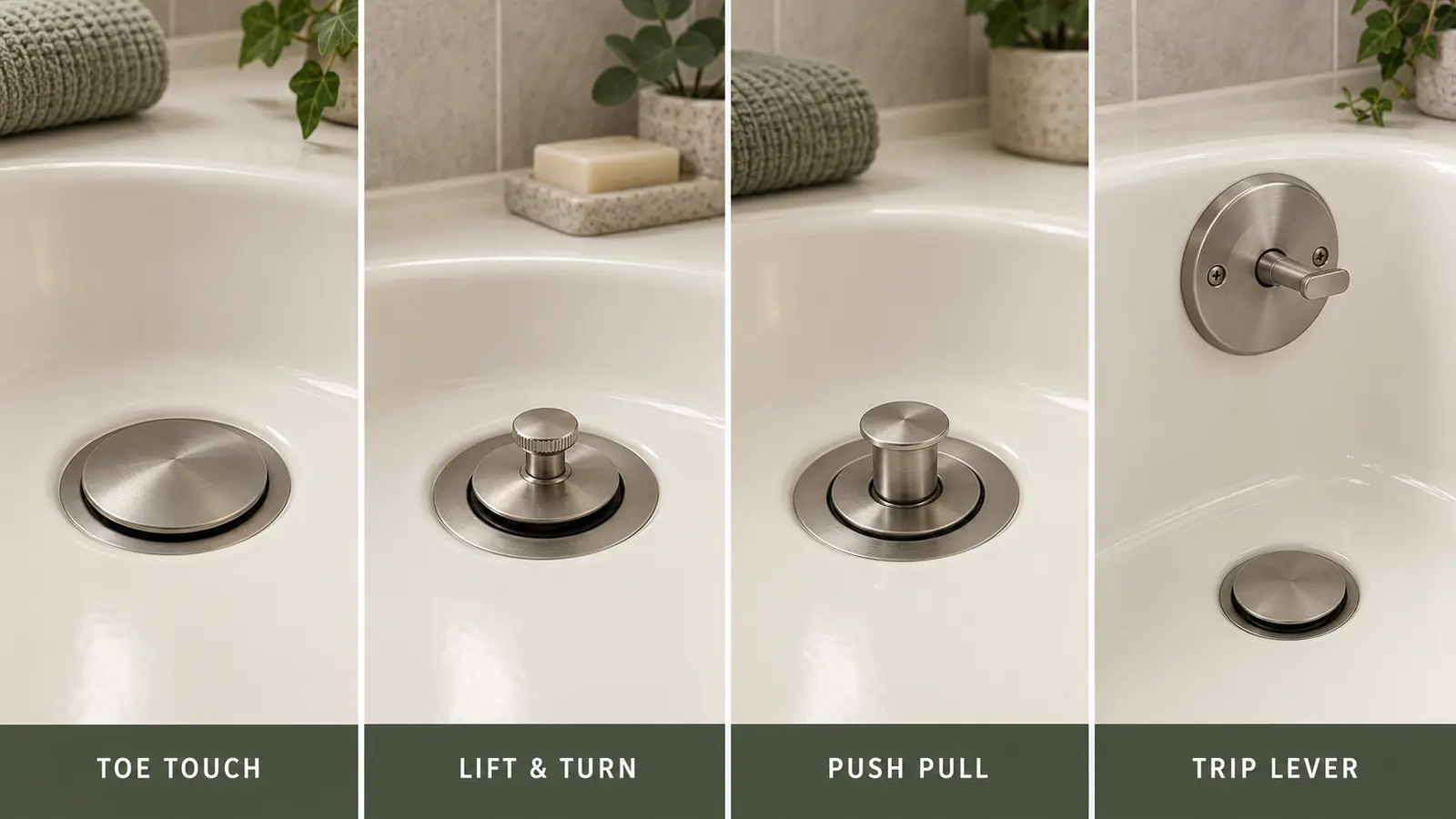
Bathtub stoppers do not all release the same way. Toe-touch, lift-and-turn, push-pull and trip-lever assemblies can hide different fasteners and linkages. Check the manufacturer’s manual or model page before twisting, prying or pulling.
Use appearance only as a clue—not proof. If the drain is under warranty, the finish is delicate, the hardware will not move with light pressure or an overflow lever controls the drain, leave the assembly intact until you have exact instructions.
What tools and supplies do you need?
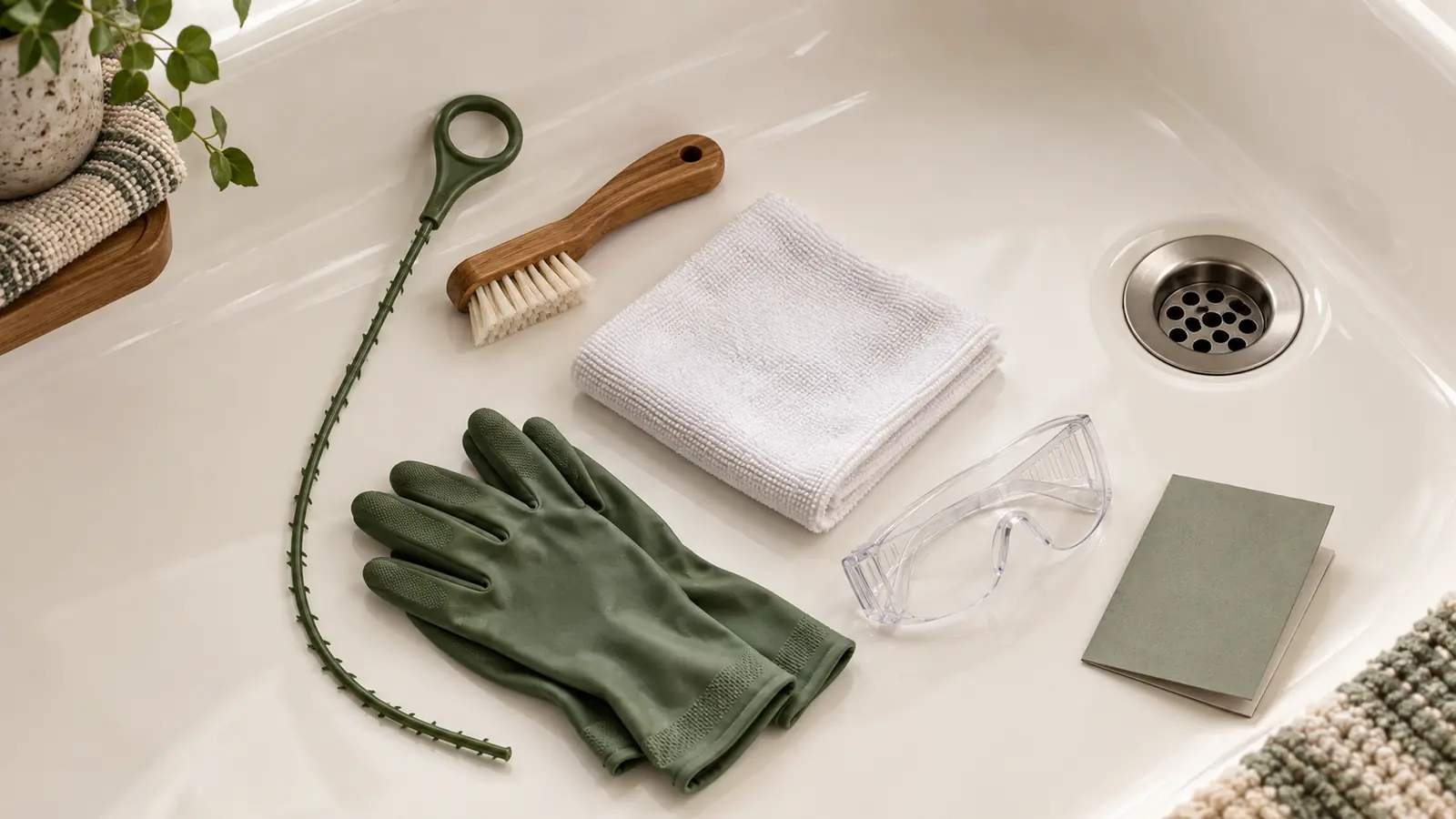
The safest first-line kit is small and nonabrasive. You are cleaning reachable components, not performing a blind repair inside the pipe.
Required
- Protective gloves and splash-resistant eye protection
- White microfiber cloths
- A soft nylon detail brush or soft toothbrush
- Mild dish soap permitted for the tub and drain finish
- The stopper, tub and drain manufacturer’s instructions
Useful when compatible
- A flexible, purpose-made nonmetal hair-removal tool
- A stopper-compatible hair catcher
- A small container for removable fasteners
- A phone camera to record the stopper before disassembly
Avoid as a starting tool
- Improvised metal hangers
- Steel wool or abrasive powder
- Boiling water as a universal flush
- Any second cleaner when the drain’s chemical history is unknown
Skip improvised metal hangers. They can scratch plated trim, snag a trip-lever linkage or push debris farther into the drain.
How to clean a bathtub drain in seven steps
Check the chemical history
Ask everyone in the household whether a drain opener, bleach, acid, descaler or other cleaner was poured into the drain. If any chemical may remain, stop. Do not create splashes by reaching, plunging or inserting a tool.
Protect yourself and the tub
Ventilate the room and wear gloves and eye protection. Remove bath mats and bottles. Follow the tub and drain-finish care guide; rinse accidental cleaner contact promptly when the maker directs.
Open only what the model permits
Photograph the stopper before disassembly. Follow the exact manual, keep small fasteners in a container and never force plated parts. A trip-lever or unfamiliar linkage is a good reason to pause.
Lift accessible hair mechanically
Insert a flexible nonmetal hair tool only far enough to capture reachable debris. Pull slowly and place the debris in the trash. Stop if the tool meets hard resistance or appears to catch a component.
Wash reachable residue
Clean the removed stopper and the accessible rim with a soft cloth or brush, mild dish soap and warm water. Keep abrasive powders, steel wool, harsh acids and caustic residue off the tub and plated finish.
Rinse with compatible warm water
Use warm water unless the plumbing and fixture manufacturer explicitly permits something hotter. Do not default to boiling water; Oatey’s plumbing guidance cautions against boiling water where PVC may be present, and nearby fixture materials may have their own heat limits.
Reassemble, dry and test
Reinstall the stopper exactly as documented. Dry the trim, run water and watch the drain. If flow does not improve, odor returns, the hardware leaks or another fixture reacts, stop escalating and call a plumber.
The flow-and-safety checkpoint
If the drain now clears normally, the stopper works and no leak or odor remains, stop. If flow is still slow, do not repeat random recipes. Recheck only accessible debris and the documented stopper assembly; then escalate according to the decision map.
Bathtub drain cleaning decision map
Which bathtub drain cleaners are appropriate?
No single cleaner is universally safe for every tub, drain finish, pipe, septic system or clog. The exact product label and the fixture manufacturer’s instructions outrank a generic internet recipe.
| Option | Reasonable use | Required condition | What it cannot promise |
|---|---|---|---|
| Mild dish soap and warm water | Stopper and reachable surface residue | Compatible with the exact tub and trim | Dissolving a deep hair plug |
| Flexible nonmetal hair tool | Accessible hair near the opening | No chemical opener is present | Safe passage through every linkage |
| Enzyme or biological product | Some organic-maintenance situations | Label approves the plumbing, septic system and use | Fast action on a dense hair clog |
| Baking soda and vinegar | At most, light residue or odor when permitted | Low expectations and a compatible drain | Reliable hair-clog removal |
| Chemical drain opener | Product-specific escalation only | Exact label, ventilation and compatibility; do not mechanically disturb the drain while chemical may remain | Routine-safe use on every system |
Does baking soda and vinegar unclog a bathtub drain?
Baking soda and vinegar are not a dependable way to remove a physical hair clog. The fizz is a visible acid-base reaction, not proof that matted hair has left the pipe. Poison Control notes that an open drain does not hold enough carbon-dioxide pressure to dislodge a tough clog reliably.
If the fixture and plumbing maker permits the ingredients, the mixture may help loosen very light residue or reduce some odor. It should not replace mechanical removal of accessible hair, and it must never be combined with bleach, a commercial drain opener or an unknown chemical.
Why does the bathtub drain smell?
A bathtub drain can smell because residue is coating the stopper or reachable drain wall, but persistent sewer-like odor needs a plumbing diagnosis. Clean accessible parts first. If the tub is rarely used, normal trap water may have evaporated; running water can refill it.
If odor continues after cleaning, quickly returns, appears with gurgling or affects more than one fixture, stop masking it with fragrance or repeated chemicals. A plumber may need to check the trap, overflow, venting, seals or a deeper line.
How do you keep a bathtub drain clean?
Prevent hair from entering the drain and clean what you can reach before flow slows. Use a stopper-compatible hair catcher, remove collected hair after bathing and wipe residue from the stopper with a maker-approved mild cleaner.
- Watch how quickly water clears instead of following an arbitrary universal schedule.
- Do not rinse dental floss, wipes, cotton swabs, packaging or dense product residue into the tub drain.
- Clean the catcher before it restricts flow.
- Keep a record of the stopper model and compatible care products.
- Investigate repeated slowdowns instead of repeatedly adding chemicals.
When should you call a plumber?
Call a plumber when the drain is fully blocked, the problem recurs, other fixtures react or the drain assembly may be leaking or damaged. These signs point beyond ordinary surface maintenance:
Standing water after a safe first-line attempt; gurgling; backups in another drain; a persistent sewer odor; water below the tub; damaged or immovable stopper linkage; a dropped tool; recurring blockage; or any situation where a corrosive cleaner may still be present.
Related CareBySurface guides
Bathtub drain cleaning FAQ
What is the safest way to remove hair from a bathtub drain?
Use a flexible, purpose-made nonmetal hair tool after confirming that no chemical cleaner is present. Remove only accessible debris, follow the stopper manual and stop if the tool catches a linkage or meets hard resistance.
Can I pour boiling water down a bathtub drain?
Do not use boiling water as a universal method. High heat can be unsuitable for some PVC plumbing and nearby fixture materials. Use compatible warm water unless the plumbing manufacturer provides different instructions.
Can I snake a drain after using chemical drain cleaner?
No. A cable, plunger or hand tool can splash corrosive cleaner back onto the user. Follow the product label and contact a plumber, telling them exactly what was poured into the drain.
Will mild dish soap unclog the bathtub?
Mild soap can clean accessible film from a stopper or drain rim, but it will not reliably remove a dense hair plug deeper in the pipe. Diagnose the physical obstruction instead of adding more soap.
Why is the bathtub still draining slowly after I removed the hair?
More debris may remain deeper in the line, the stopper may be misadjusted or another plumbing condition may be restricting flow. Recheck the assembly once; if the slowdown persists or recurs, arrange professional diagnosis.
How often should I clean a bathtub drain?
There is no universal schedule. Clean the hair catcher and accessible stopper based on household use, hair load and the first sign of slower flow, while following the fixture manufacturer’s maintenance guidance.
Bottom line
The safest way to learn how to clean a bathtub drain is to keep cleaning separate from deep unclogging: confirm the chemical history, identify the stopper, remove only accessible hair with a non-scratching tool, clean reachable residue with a finish-compatible mild method, rinse with warm water and test the flow. Stop for standing water, recurring blockage, gurgling, leakage or any chemical that may remain in the line.
Evidence and manufacturer guidance
Care instructions vary by model and finish. The sources below support the safety boundaries in this guide; always verify the current instructions for your exact fixture and product.
- Poison Control: What’s in drain cleaner? — corrosive ingredients, burn risk and heat hazards.
- Poison Control: Spring-cleaning safety — never mix household cleaning chemicals.
- Lowe’s: How to use a drain snake — PPE and the warning not to snake after chemical cleaner.
- Delta: Cleaning and care — finish-specific cleaner restrictions.
- Moen: Faucet finish care and cleaning — mild care and finish exclusions.
- Kohler: Bath drain care manual — warm water, mild soap and nonabrasive care.
- Oatey: How to unclog a shower drain — boiling-water caution for PVC.
- Roto-Rooter: Bathtub drain clog methods — method depends on clog composition and location.

