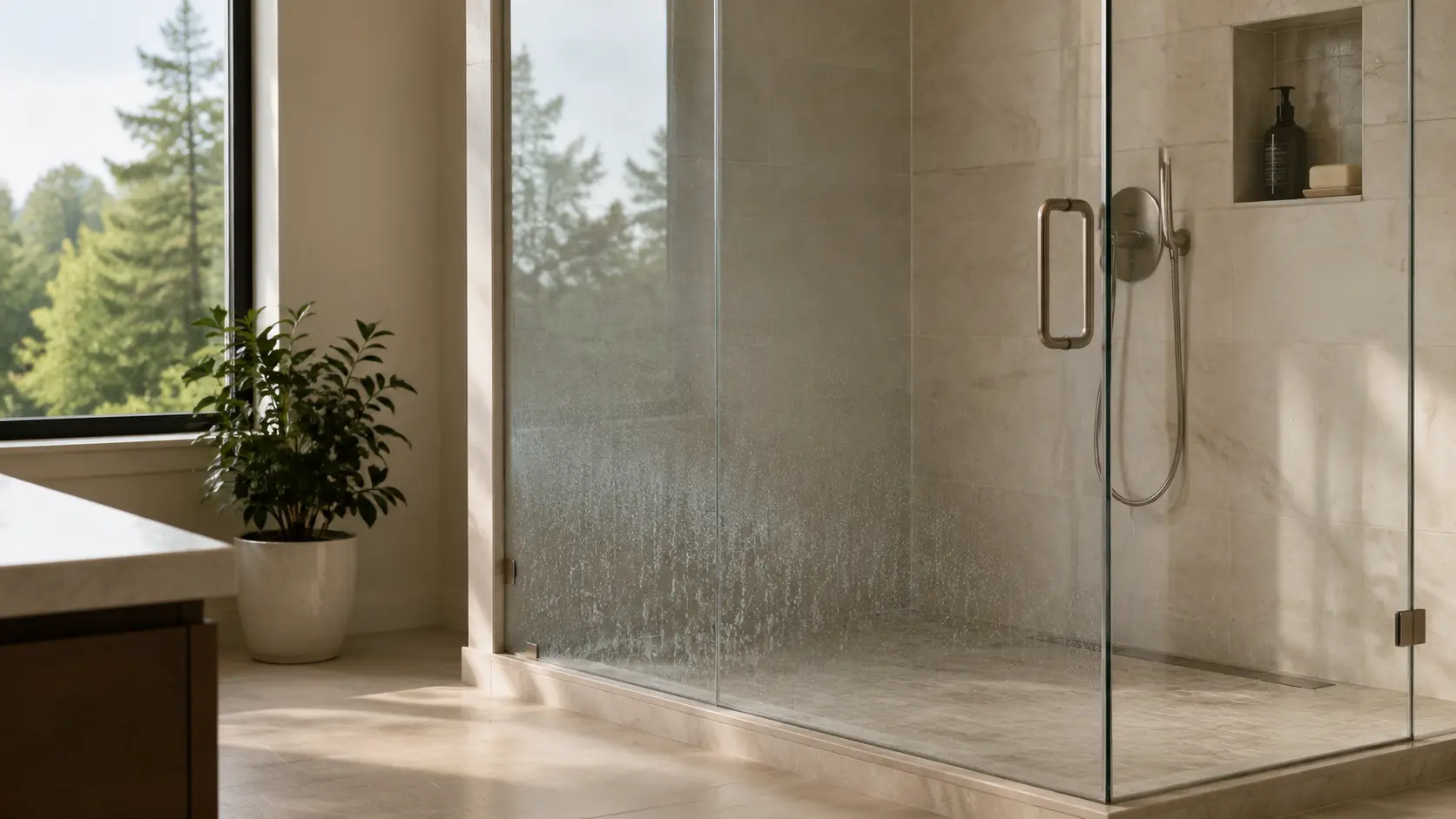
Clear glass starts with the right diagnosis. This finish-aware method separates soap film, mineral scale, cleaner residue and possible surface damage before you reach for vinegar, an abrasive pad or a stronger product.
How to clean shower glass safely
Start with the glass fully dry. Check for a factory-applied easy-clean coating and protect nearby stone and decorative hardware. Wash the wet side with a small amount of mild dish detergent, warm water and a clean microfiber cloth. Rinse completely, squeegee and dry. If chalky mineral spots remain, use a coating-compatible mineral treatment only after checking the door manufacturer. Stop if the dry glass remains rough, pitted, patchy or permanently dull.
Before you spray vinegar over the whole door
Vinegar may loosen mineral deposits on compatible glass, but overspray can etch marble, limestone and travertine and may conflict with care instructions for coatings, metal finishes, sealants or tracks. Never mix vinegar or another acid with bleach. If you cannot identify the glass treatment or nearby materials, begin with mild detergent and verify the manufacturer before escalating.
Shower glass collects more than water. Bar soap, shampoo, body oils and conditioner leave an organic film. Calcium and magnesium remain after hard water evaporates. Too much cleaner can leave streaks of its own. On older doors, repeated deposits and harsh cleaning may also alter a coating or leave the glass permanently rough. Treating all four conditions as “soap scum” is why many popular hacks disappoint.
Diagnose the mark on fully dry shower glass
Photograph the door before cleaning, then examine the interior face in angled daylight or with a flashlight held almost parallel to the glass. Run a clean, dry fingertip lightly across a small area without grinding any particles into the surface.
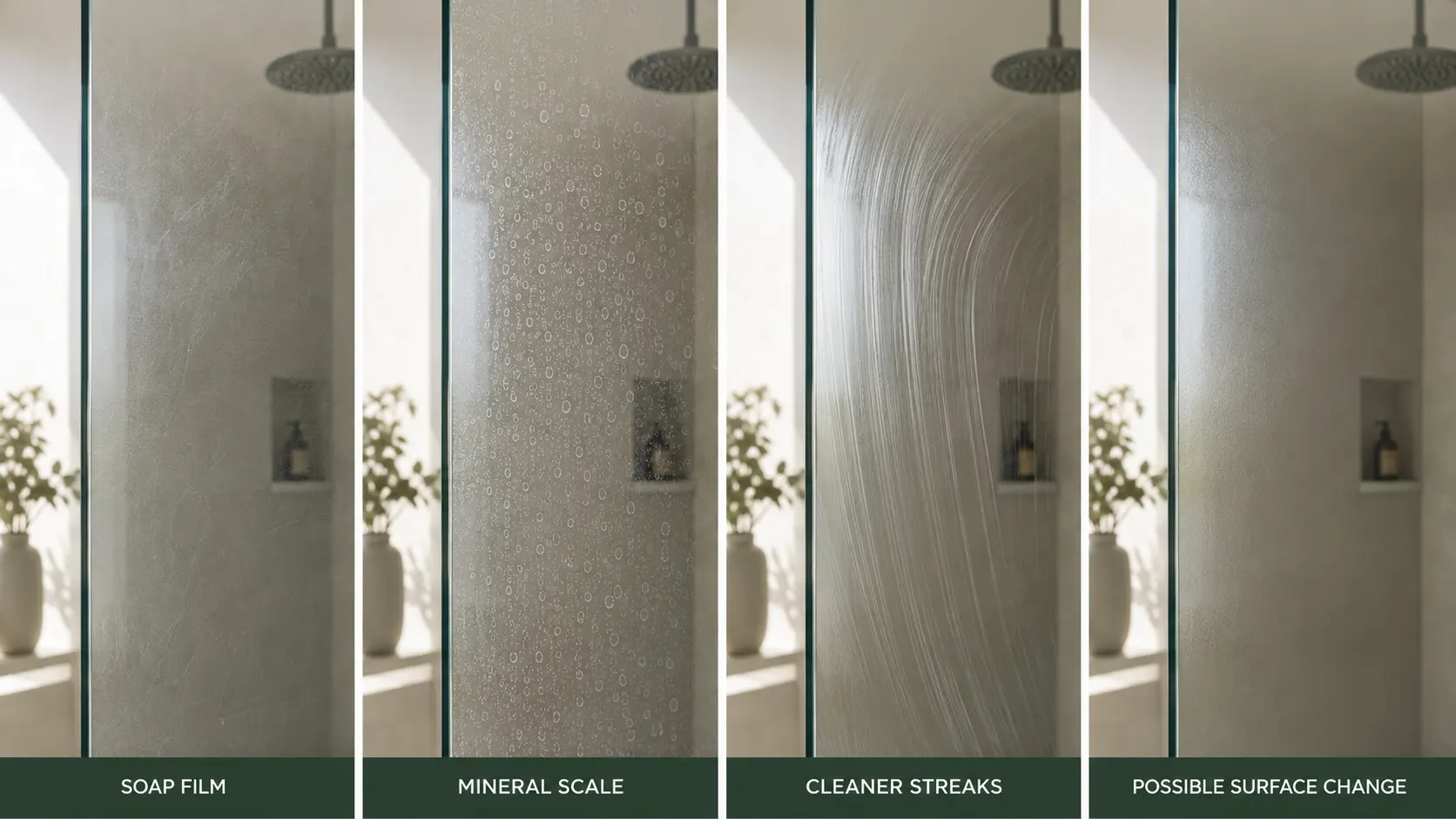
| What the dry glass looks or feels like | Most likely condition | Best first response |
|---|---|---|
| Greasy, gray or rainbow smear that moves under a damp cloth | Soap, body oil or cleaner film | Mild detergent, complete rinse and fresh-cloth dry. |
| Chalky white dots, rings or raised crust concentrated in the wet zone | Hard-water mineral scale | Baseline clean first; then verify coating and adjacent materials before descaling. |
| Long wipe lines or hazy patches that appeared after cleaning | Too much cleaner, dirty cloth or hard-water rinse residue | Rinse with clean water; finish with distilled water if needed and dry with a fresh cloth. |
| Clear while wet but cloudy again when completely dry | Thin residue or mineral deposit still present | Repeat diagnosis; do not jump directly to an abrasive. |
| Flat dull patch with changed reflection that does not improve | Possible coating wear or permanent surface change | Stop escalating and consult the manufacturer or glass-restoration professional. |
| Rough pits remain after deposits are removed | Possible corrosion/etching of the glass surface | Cleaning cannot replace missing glass; seek restoration guidance. |
Thirty-second test: removable film or something deeper?
- Choose an inconspicuous lower corner away from hardware and stone.
- Wash a palm-size area with mild detergent and a clean microfiber cloth.
- Rinse until it no longer feels slippery.
- Squeegee, towel-dry and allow it to become completely dry.
- Compare texture and reflection with the untreated area.
If the test patch improves, continue with the baseline method. If it remains equally dull or rough, stronger household chemistry is not automatically the answer.
Check whether the shower glass has a protective coating
Many modern doors use a factory-applied hydrophobic or “easy-clean” treatment. Water beading alone does not reliably identify the coating or its condition. Check the purchase invoice, door manual, etched manufacturer mark, warranty registration or installer records. Use that coating’s current care instructions over a generic internet recipe.
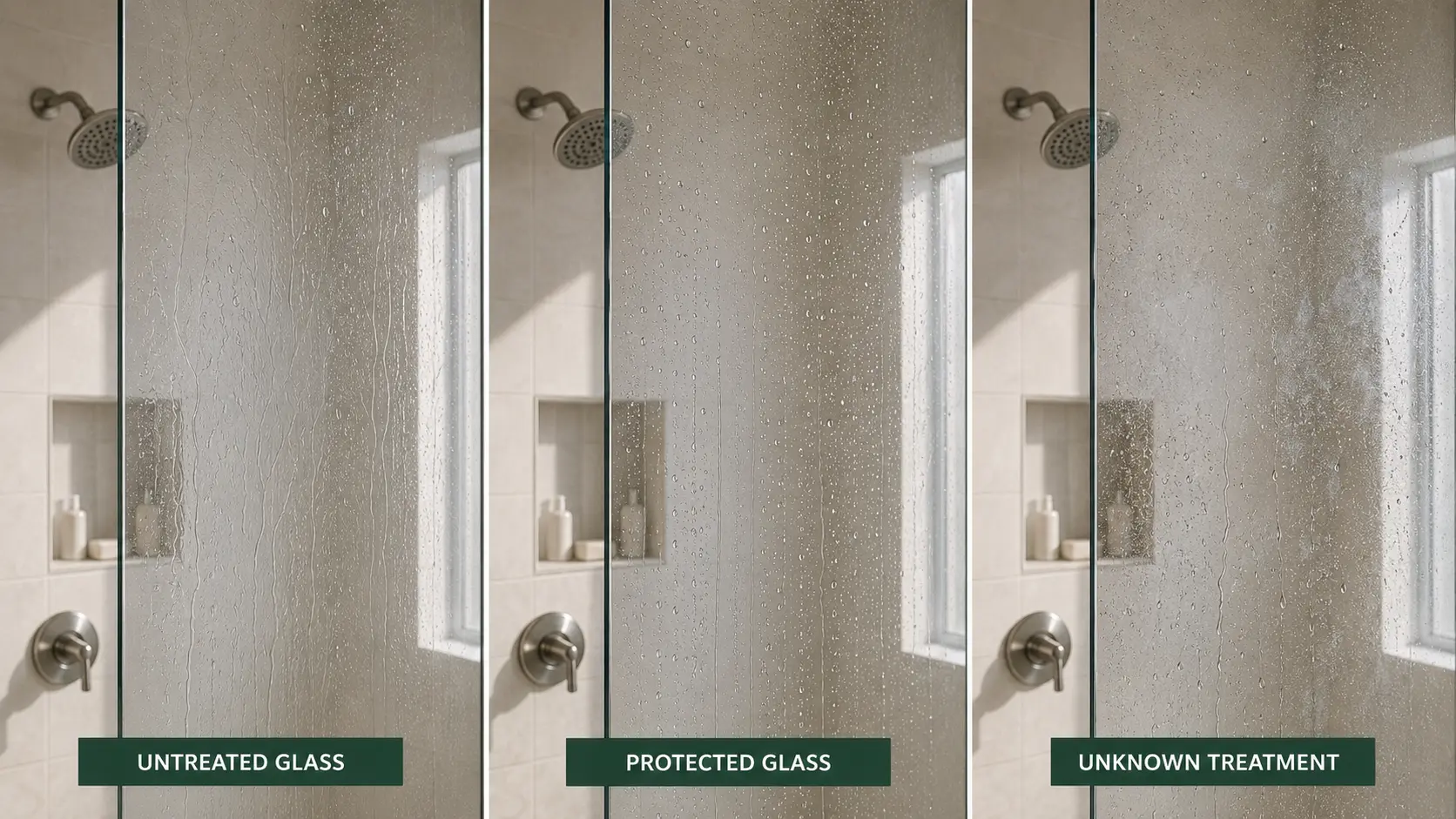
Known untreated glass
Use the baseline wash first. A compatible mineral remover may be considered only for a confirmed deposit and with nearby surfaces protected.
Known protected glass
Follow the coating maker’s cleaner list, tool limits, dilution and maintenance frequency. Preserve warranty documentation.
Unknown treatment
Assume it may be sensitive. Stay with mild detergent and nonabrasive microfiber until the door or installer is identified.
Patchy repellency
Uneven beading can reflect contamination or coating wear. Clean gently, dry and ask the manufacturer before applying another coating over it.
What you need
Baseline kit
- Clean microfiber wash cloth
- Separate lint-free drying cloth
- Soft rubber squeegee in good condition
- Mild dish detergent without abrasive particles
- Warm—not scalding—water
- Small bucket or controlled spray bottle
- Dry towels to shield stone and hardware
- Gloves and eye protection required by the chosen product
- Door manual or coating care guide
Do not begin with
- Razor or metal scraper
- Steel wool on unknown glass
- Scouring powder
- Dry melamine foam
- Drill-mounted scrubber
- Undiluted concentrate
- Automotive windshield coating
- Several cleaners used in sequence
- Acid where it can reach natural stone
How to clean shower glass in seven finish-aware steps
Identify the glass, coating and surrounding materials
Find the manufacturer and coating information if possible. Note natural-stone walls or thresholds, silicone joints, vinyl sweeps and plated, painted, PVD or living-metal hardware. The most sensitive material touched by runoff should control the method.
Inspect and photograph the dry door
Work when the door is cool and out of direct sun. Photograph the wet-side face, bottom edge and hardware. Mark the worst patch mentally and note whether it feels greasy, raised, rough or perfectly flat. Do not scrape a mystery deposit to “test” it.
Protect stone, finishes, seals and the floor
Remove toiletries. Place absorbent towels over acid-sensitive stone and below the door. Do not saturate hinges, rollers, silicone, vinyl seals or bottom tracks. Ventilate the room and follow any cleaner-label PPE requirements.
Apply the mild-detergent baseline
Add only a small amount of dish detergent to warm water. Wet a clean microfiber cloth and wipe from top to bottom with overlapping strokes. Apply enough solution to lubricate the glass without flooding the enclosure. Give greasy film a few minutes to soften, but do not let the solution dry.
Agitate gently and work in small sections
Use the folded microfiber or a coating-approved nonabrasive sponge. Straight overlapping passes make missed areas easier to see. Change to a clean cloth face as residue transfers. Avoid grinding crust into the glass and do not scrub directly across coated hardware.
Rinse until no cleaner remains
Remove the loosened film with controlled clean-water rinsing or repeated clean damp cloths. Cleaner left behind creates haze and attracts more soil. In a hard-water home, a final wipe with distilled water can prevent the rinse itself from leaving new mineral spots.
Squeegee, towel-dry and inspect again
Pull the squeegee from top to bottom, wiping its blade after each pass. Dry edges, seals and hardware with a separate cloth. Wait until the glass is completely dry before judging the result. If only chalky raised deposits remain, move to the mineral branch; if the reflection or texture has changed, stop.
Shower-glass cleaning decision map
Treat what remains after the baseline clean
Soap scum or greasy film
Repeat the mild-detergent wash with a fresh cloth and slightly longer contact time rather than adding more detergent. Soap scum is a mixed residue of soap, body oils and water minerals; excess DIY dish soap can become part of the haze. Rinse several times and dry before deciding it failed.
Hard-water mineral scale
First confirm that the remaining mark is chalky or raised and that the glass, coating, hardware and nearby stone permit an acidic or commercial mineral treatment. Use one product at its labeled dilution and dwell time on a small test area. Keep it wet only for the permitted time, agitate with an approved soft tool, rinse thoroughly and dry. Do not extend dwell time simply because a deposit is old.
Cleaner streaks or rinse residue
Use clean water and a fresh microfiber cloth; do not add another cleaner. A final distilled-water wipe followed by immediate squeegeeing can separate rinse residue from a true surface problem. Wash or replace cloths contaminated with fabric softener, wax or oily products.
Persistent roughness, pitting or dullness
Stop. Mineral deposits can sometimes leave lasting microscopic damage after they are removed, and aggressive tools can scratch glass or alter a coating. A glass-restoration professional or the door manufacturer can determine whether polishing, coating service or panel replacement is appropriate. Never promise a cleaner will restore glass that is physically changed.
Protect the materials surrounding the glass
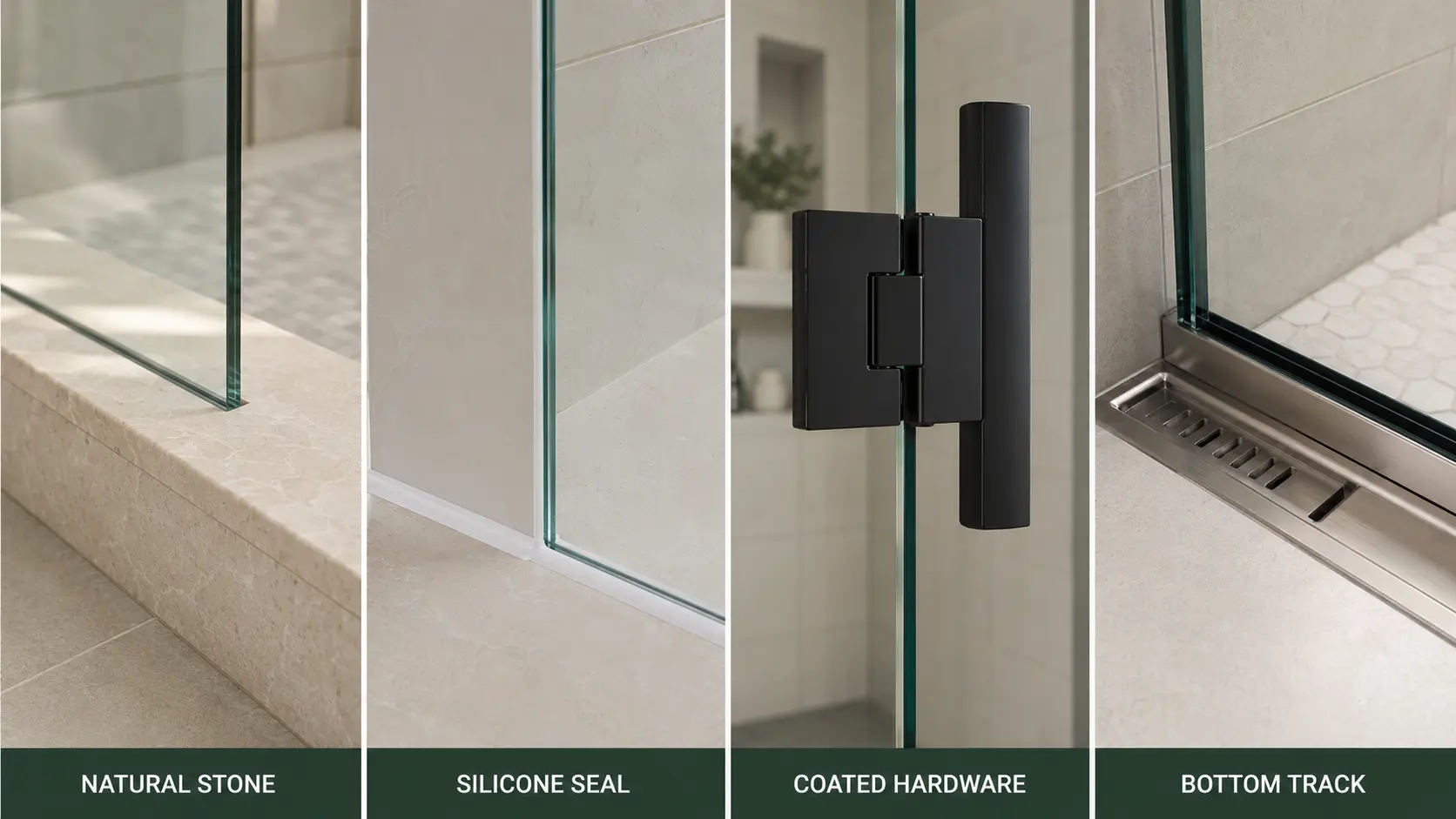
Marble, limestone and travertine
Keep vinegar, lemon, citric acid and acidic descalers away. For stone guidance, see how to clean travertine tiles safely and how to diagnose white marks on marble.
Silicone and vinyl sweeps
Do not soak or aggressively scrub them. If a sweep traps residue, follow the door manual for safe removal and reinstallation.
Matte, plated and PVD hardware
Apply cleaner to the cloth rather than spraying the whole enclosure. Rinse and dry promptly if the finish maker permits it.
Bottom tracks and drainage
Use controlled moisture. Do not force dirty solution into screw holes, wall channels or failed seals; keep drainage openings unobstructed.
What not to use on unknown shower glass
| Method | Why it is risky | Better decision |
|---|---|---|
| Razor blade or metal scraper | Can scratch coated glass and catch at edges; tempered glass defects make scraping especially consequential. | Use the deposit-specific, manufacturer-approved method. |
| Steel wool | Some branded restoration systems allow a specific grade under controlled wet conditions, but that does not make it universal. | Use only when the exact glass/coating instructions explicitly authorize it. |
| Abrasive powder or rough pad | May scratch glass, remove a coating and damage hardware. | Begin with microfiber and a nonabrasive approved sponge. |
| Melamine foam used aggressively | It cleans through fine mechanical abrasion and may affect unknown coatings or adjacent finishes. | Confirm manufacturer permission and use the least pressure. |
| Vinegar plus baking soda | The visible fizz is acid-base neutralization, not proof of stronger cleaning; the paste can add abrasion. | Choose the chemistry for the diagnosed deposit instead of combining recipes. |
| Bleach mixed with acid or ammonia | Can release dangerous gases. | Never mix cleaners. Rinse as directed and use one method per session. |
| Automotive water repellent | May not be approved for interior shower glass, coatings, seals or warranty conditions. | Use only a shower-glass treatment approved by the door/coating maker. |
Why shower glass is still cloudy after cleaning
Too much cleaner
A concentrated mix or large quantity of dish soap can leave a film. Rinse repeatedly with clean water and use fresh cloths.
The rinse water is hard
Tap water can leave new deposits as it dries. Finish the test area with distilled water and dry immediately.
The deposit was misidentified
Detergent removes oily film but may not dissolve mineral crust. Acid may target scale but is not the right first answer for grease.
The coating changed
Patchy sheen or repellency after aggressive cleaning may be coating wear rather than dirt. Contact the coating or door manufacturer.
The glass is physically altered
Pitting and permanent dullness do not disappear when residue is removed. Professional restoration may be required.
Residue is behind a seal
Dirt beneath a sweep or inside an inaccessible assembly cannot be reached safely by spraying more cleaner over the glass.
Keep shower glass clear with less deep cleaning
After each shower
- Squeegee the wet side from top to bottom.
- Dry the bottom edge, seals and hardware with a soft cloth.
- Leave the enclosure arranged for airflow.
- Run the exhaust fan long enough to clear humidity.
Weekly
- Use a damp microfiber cloth and mild detergent according to the door/coating instructions.
- Rinse away product completely.
- Inspect corners, sweeps and tracks without flooding them.
Monthly
- Check for coating changes, loose hardware, damaged seals or blocked drainage.
- Address a small mineral deposit before it becomes a thick crust.
- If hard water is persistent throughout the home, investigate water-quality treatment separately rather than compensating with harsher daily cleaning.
Frequently asked questions
What is the best way to clean shower glass?
Start with mild dish detergent, warm water and a clean microfiber cloth. Rinse thoroughly, squeegee and dry. Diagnose anything that remains before escalating: smeary film needs better degreasing and rinsing, while chalky raised deposits may need a coating-compatible mineral treatment.
Can vinegar damage shower glass?
Diluted vinegar is permitted by some shower-glass and coating manufacturers, but not by all. It can damage acid-sensitive natural stone beside the door and may affect certain finishes or care warranties. Confirm the door, coating and surrounding materials before using it.
How do you remove hard-water stains from shower glass?
First wash away soap film, rinse and dry. If raised chalky deposits remain, verify the glass coating and nearby surfaces, then use one approved acidic or commercial mineral remover at its labeled dilution and dwell time. Rinse completely and stop if the dry surface becomes rough or patchy.
Why is my shower glass cloudy after cleaning?
The glass may still hold soap film, mineral scale or excess cleaner. Hard rinse water and dirty cloths can also leave haze. If one controlled detergent wash and complete dry inspection reveal persistent roughness, pitting or changed reflection, the glass or coating may be physically altered.
Can I use a Magic Eraser on shower glass?
Melamine foam works through fine mechanical abrasion. Some manufacturers permit it in specific circumstances, while unknown coatings and nearby finishes may be vulnerable. Check the door and coating instructions, keep it wet, use minimal pressure and test a hidden area first.
Can baking soda scratch shower glass?
Baking soda is an abrasive powder, even though it is milder than many scouring products. It can be inappropriate for coated glass or decorative finishes. A mild detergent and microfiber cloth are safer starting tools; use abrasives only when the manufacturer explicitly permits them.
How do I know if my shower glass has a protective coating?
Check the invoice, installer paperwork, warranty registration, etched door mark or manufacturer documentation. Water beading alone is not reliable proof because clean untreated glass and contaminated coated glass can both mislead visual inspection.
Can permanently etched shower glass be restored?
Cleaning removes material sitting on the glass; it cannot replace glass lost to pitting or corrosion. Some damage can be professionally polished, but feasibility depends on depth, distortion, glass type, coating and safety. Ask a qualified glass-restoration professional before attempting abrasive DIY polishing.
How often should shower glass be cleaned?
Squeegee after use when practical and follow the coating or door maker’s routine-cleaning schedule. Weekly mild cleaning works well for many homes; hard-water conditions or heavy product use may require more frequent maintenance. Early removal is safer than aggressive treatment of thick buildup.
Should I use a razor blade on shower glass?
Not on unknown or coated shower glass. A blade can scratch coatings, catch near edges and create irreversible damage. Use a manufacturer-approved deposit-removal method or obtain professional guidance when a stubborn crust cannot be removed conservatively.
Bottom line
The safest way to clean shower glass is to identify the mark, confirm any coating, begin with mild detergent, rinse completely and judge the result only when dry. Escalate only for a diagnosed deposit and only when every material touched by the cleaner permits it. If the glass remains rough, pitted, patchy or permanently dull, stop scrubbing—the problem may no longer be removable residue.
Sources and manufacturer guidance
- Delta Shower Doors: The Right and Wrong Way to Clean Shower Glass
- EnduroShield: Glass Treatment Care FAQ
- Basco: Homeowner Care Instructions
- Bunnings Australia: How to Clean Shower Glass
- Good Housekeeping: Cleaning Glass Shower Doors
Editorial note: Generic guidance cannot override the current instructions for a particular door, coating, sealant, hardware finish or cleaner. Product formulas and warranty requirements can change; verify labels and manufacturer documentation before use.

