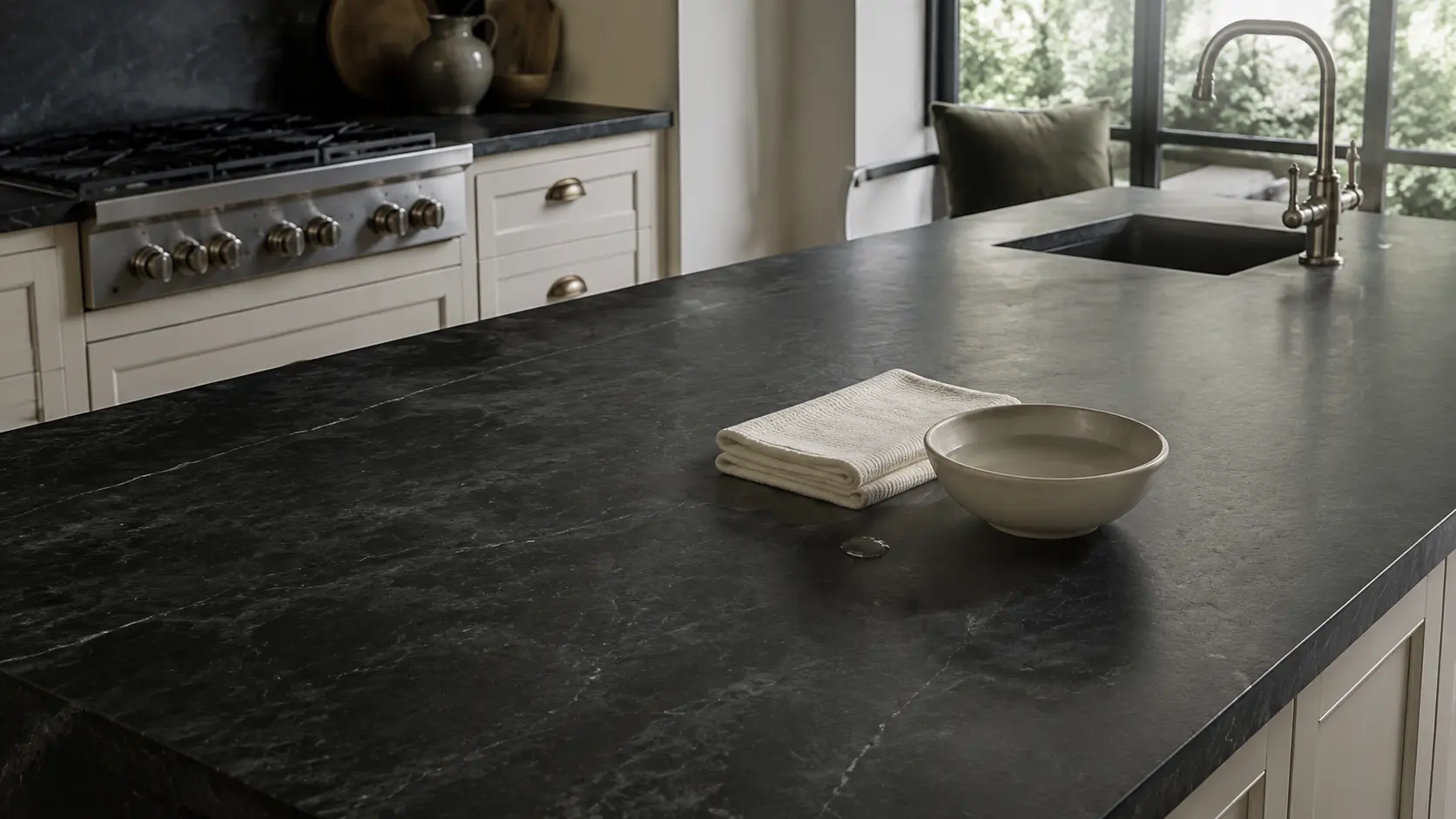
Countertop Care · Soapstone
Soapstone is forgiving, but cleaner film, uneven mineral oil and soapstone-look surfaces can make a simple cleanup confusing. This finish-aware guide starts gently, separates cleaning from appearance treatment and explains what the fully dry result means.
The short answer
To clean confirmed soapstone countertops, use warm water, a small amount of mild dish soap and a soft cloth or nonabrasive sponge. Wipe away the soap with a separate clean damp cloth, then dry completely. If a mark remains, determine whether it is cleaner film, excess oil or wax, normal patina, or a physical scratch before applying another product.
Routine clean: about 5 minutesBefore cleaning, confirm it is real soapstone
Before following any advice about how to clean soapstone countertops, confirm the material. “Soapstone” may mean quarried architectural stone, but the word also appears in laminate patterns, engineered-surface color names and coated products. A method tolerated by genuine stone may damage a printed layer or factory coating.
Find the product record
Check the invoice, slab label, installer paperwork or fabricator’s care sheet. Documentation is more reliable than deciding from color or veining alone.
Identify the treatment
Determine whether the surface is untreated, darkened with mineral oil, maintained with a wax product or covered by an unknown finish.
Diagnose the mark before choosing a cleaner
Cleaning removes surface soil and residue. It cannot erase every color difference or replace material removed by a scratch. Examine the countertop dry, then use your fingertips and angled light to compare height, texture and reflection.
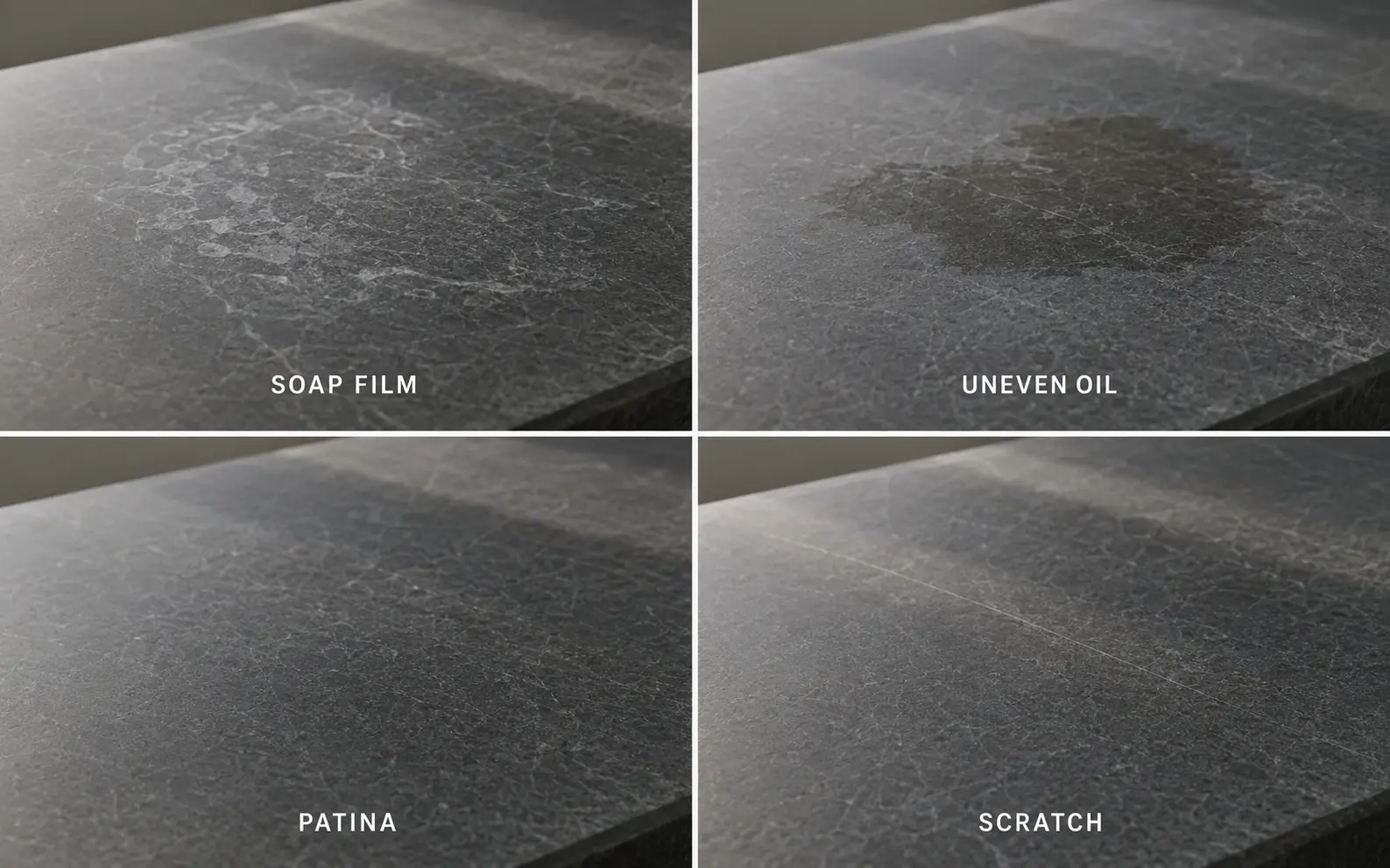
| What you see | Likely explanation | Safest next move |
|---|---|---|
| Greasy smear or fingerprints | Cooking grease, excess mineral oil or wax | Mild wash, clean-water wipe and complete drying |
| Dark patch with no texture change | Uneven treatment or developing patina | Clean first; compare only when fully dry |
| Pale streak after washing | Soap remains or some appearance treatment was removed | Rinse once; identify the original treatment before reapplying it |
| Fine pale line in angled light | Scuff or scratch in the softer stone | Do not sand until the finish and repair method are confirmed |
| Raised dried material | Food or other surface residue | Soften during routine washing; do not use a blade |
| Peeling layer or damaged printed pattern | Possible soapstone-look product rather than bare stone | Follow that product manufacturer’s instructions |
| Line crossing an edge, seam or cutout | Possible crack or assembly movement | Stop and contact the installer or fabricator |
Tools and supplies for a routine clean
- Warm water—not a temperature extreme
- A small amount of mild dish soap
- Two clean, soft cloths, or one cloth and a nonabrasive sponge
- A clean absorbent towel for the dry-result check
- The fabricator or treatment-product instructions, when available
This restrained kit is enough for routine soil. Polycor’s soapstone guidance describes mild dish soap and water as basic care. M Teixeira’s specialist guidance likewise recommends regular soap and water while separating cleaning from optional mineral-oil treatment.
Soapstone cleaner and treatment guide
The stone, its appearance treatment and the surrounding assembly do not always share the same chemical tolerance. Start with the lowest-risk option that can complete the job.
| Product or method | Routine use? | What to know |
|---|---|---|
| Warm water | Yes | Remove loose soil first and dry before judging color. |
| Mild dish soap | Yes | Use a small amount, then remove it with clean water to prevent film. |
| Fabricator-approved cleaner | Optional | Confirm that it suits the existing oil, wax or coating. |
| Mineral oil | No—appearance care | It darkens confirmed soapstone; it is not the routine cleaner. |
| Soapstone wax | No—appearance care | Follow the exact wax-system instructions; do not layer unknown products. |
| Baking soda | Not first choice | It can behave as a mild abrasive and is unnecessary for ordinary soil. |
| Vinegar | Unnecessary | It may contact treatment, seams, caulk, hardware or adjacent materials with different limits. |
| Bleach, ammonia or solvent | Avoid as first response | A stronger cleaner may strip appearance treatment or affect the installed assembly. |
| Abrasive pad or sandpaper | No—possible repair | Requires confirmed material, finish, treatment and repair instructions. |
How to clean soapstone countertops in 7 safe steps
Inspect the dry countertop
Remove small appliances and note greasy zones, pale lines and raised residue before water changes the reflection. Photograph a questionable mark so you can compare the same area afterward.
Lift loose crumbs and grit
Use a clean soft cloth. Do not drag grit beneath the sponge because genuine soapstone is softer than many common countertop materials and can show scuffs.
Prepare a mild wash
Dampen a soft cloth or nonabrasive sponge with warm water and add only a small amount of mild dish soap. Extra soap can leave a cloudy or greasy-looking film.
Wipe with light overlapping passes
Let dried food soften during the wash. Avoid attacking it with an abrasive pad, razor blade or metal scraper.
Remove the soap
Use a separate cloth dampened with clean water. Rinse or change it when dirty, and take care around seams, backsplash joints, caulk and the faucet base.
Dry completely
Dry with a clean towel, then allow remaining moisture to disappear. A wet surface can hide streaks and temporarily make treatment look more even.
Recheck height, texture and reflection
View the area from the side under ordinary angled light. If it is clean and uniform, stop. If it remains greasy, repeat only the mild wash. A persistent physical or structural change needs diagnosis—not stronger cleaner.
CareBySurface decision map
What should you do after cleaning soapstone?
Follow the result visible only after the countertop is completely dry.
Is it genuine architectural soapstone or a soapstone-look laminate, engineered surface or coated product?
Determine whether it is untreated, mineral-oiled, wax-treated or covered by an unknown finish.
Use warm water, mild dish soap and a soft cloth. Remove the soap and let the surface dry fully.
The mark was removable residue. No oil, wax or stronger cleaner is needed.
Repeat the mild wash and clean-water wipe. Do not add more oil to hide it.
Inspect under angled light. Do not sand until the material and finish are confirmed.
Contact the fabricator for a crack, chip, moving seam, peeling coating or unidentified surface.
Cleaning is not the same as oiling soapstone
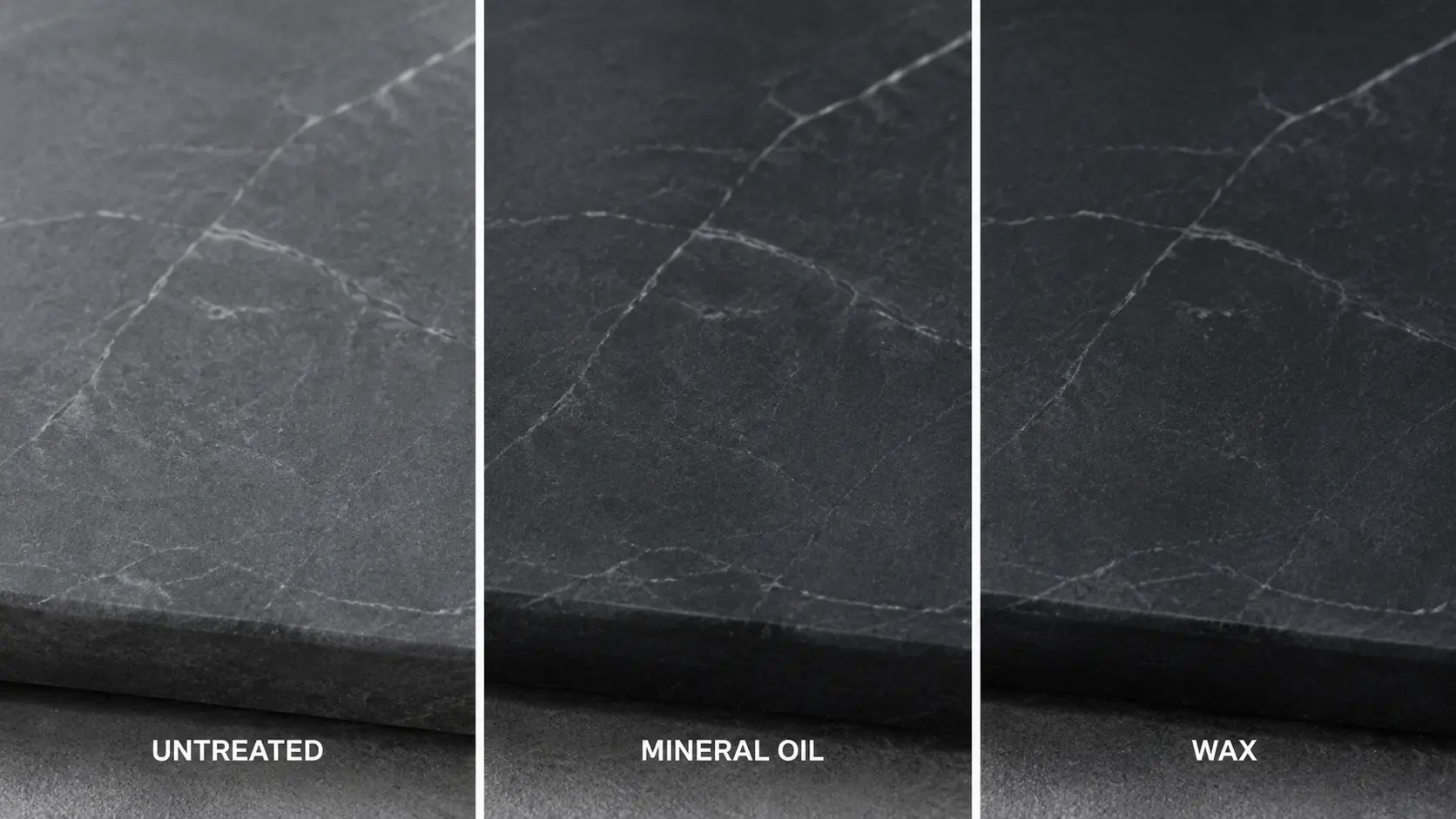
Mineral oil is commonly used to darken soapstone and make its appearance more uniform. It is not the cleaner used in the routine above. M Teixeira explains that mineral oil does not seal or protect genuine soapstone; it accelerates the natural darkening effect. Read the specialist care guidance.
Untreated soapstone
It can remain naturally lighter gray. Washing it does not create a requirement to begin oiling.
Mineral-oiled soapstone
The darkened appearance may fade unevenly between applications. Clean and dry first, then follow the original fabricator’s care system.
Wax-treated soapstone
Use the instructions for the exact treatment. Do not layer an unknown oil over wax or assume both systems need the same preparation.
Unknown coating or treatment
Stop after gentle cleaning. Ask the installer, manufacturer or fabricator before using solvent, abrasive, oil or wax.
Dish soap made the soapstone lighter—was it damaged?
Not necessarily. A lighter patch after washing may mean soap residue remains or that some mineral oil or wax was removed. That is an appearance change, not automatic proof of stone damage. Rinse once with a clean damp cloth, dry completely and inspect the area under angled light.
If the surface remains smooth and the difference is only color, identify the product previously used before re-treatment. Do not add oil merely to hide dirt or unknown residue. If the patch feels rough, crosses a seam or belongs to a coated lookalike surface, stop and request product-specific guidance.
How to handle sticky or uneven oil marks
If the counter feels tacky or shows fingerprints after oiling, treat it first as excess product. Wash gently with mild dish soap, lift the residue with a clean damp cloth and dry. Do not pour on more oil to disguise the patch.
If cleaning leaves a stable light-and-dark difference without grease or texture change, it may be uneven treatment or developing patina rather than dirt. Follow the exact oil or wax instructions. When the treatment is unknown, ask the fabricator before attempting removal or switching products.
What to do about soapstone scratches
Genuine soapstone can develop scuffs, nicks and scratches that become part of its patina. Some fabricators describe sanding as a repair option, but grit sequence and blending depend on the original stone texture and treatment. Sanding one isolated spot can leave a larger mismatch in sheen or color.
Can you clean soapstone countertops with vinegar?
Although bare architectural soapstone is known for chemical resistance, vinegar is unnecessary for routine care and is a poor universal recommendation for an installed counter. It may contact oil or wax, seam material, caulk, faucet finish or an adjacent backsplash with different care limits. Mild dish soap and water provide the lower-risk first action.
Products and tools to avoid as a first response
- Do not mix cleaning chemicals.
- Do not begin with vinegar, chlorine bleach, ammonia or solvent when mild cleaning is adequate.
- Do not use steel wool, harsh scouring pads, melamine foam or abrasive powder without finish-specific approval.
- Do not use a razor blade or metal scraper on raised material.
- Do not steam an unknown seam, caulk joint or coated lookalike surface.
- Do not add mineral oil or wax before removing soil and identifying the existing treatment.
This conservative first-response list does not claim that every substance listed attacks bare soapstone. A countertop is an installed assembly, and aggressive treatment may alter its appearance system or neighboring materials even when the stone itself is tolerant.
When to contact the fabricator or manufacturer
Pause DIY work for a crack, moving seam, chip at a sink cutout, loose backsplash, spreading discoloration from below, peeling coating or a deep scratch that needs professional blending. Also get guidance when the counter may be a soapstone-look product or its treatment history is unknown.
Send dry photographs taken in normal and angled light, plus the invoice, product or stone name, installation date and a list of cleaners or treatments already used. Those details are more useful than describing the counter only as “stained.”
Simple soapstone countertop maintenance
- Wipe cooking residue before it dries into a film.
- Use a clean soft cloth so trapped grit is not dragged across the stone.
- Remove soap with clean water and dry before evaluating color or sheen.
- Keep the same documented oil or wax system unless the fabricator approves a change.
- Use cutting boards and trivets as practical habits.
- Inspect seams, caulk, edges and sink cutouts separately from the broad stone surface.
Continue with the right surface-care guide
If the material turns out not to be soapstone, use the guide written for that surface rather than adapting this method.
Frequently asked questions
What is the best cleaner for soapstone countertops?
For routine soil on confirmed architectural soapstone, start with warm water and a small amount of mild dish soap on a soft cloth or nonabrasive sponge. Remove the soap with clean water and dry completely. Follow the fabricator’s instructions if the surface has wax, oil or a specialty coating.
Does soapstone need to be sealed?
Specialist soapstone sources state that genuine architectural soapstone does not normally require a penetrating sealer. Mineral oil is generally used to darken and even its appearance rather than seal it. Confirm that the counter is genuine soapstone and follow its fabricator’s instructions.
How often should I oil soapstone?
There is no universal schedule. Frequency depends on the stone, previous treatment, use and the appearance you prefer. Reapply only after cleaning and drying, following the installer or treatment maker rather than an arbitrary calendar.
Why does soapstone look cloudy after cleaning?
A cloudy or smeary appearance may be remaining soap, excess oil or wax, or uneven treatment. Wipe once with clean water, dry fully and inspect under angled light. If texture or reflection changed, stop adding products and verify the treatment.
Can dish soap remove mineral oil from soapstone?
Repeated or concentrated cleaning can make an oiled or waxed area appear lighter by removing some surface treatment. Rinse, dry and identify the original care system before reapplying anything. A lighter color alone does not prove that the stone was damaged.
Can I use baking soda on soapstone?
Baking soda is unnecessary for routine care and can behave as a mild abrasive. Start with mild dish soap and water. Use an abrasive method only when the fabricator confirms it for the exact stone texture and treatment.
Can scratches be removed from soapstone?
Some scratches in genuine soapstone can be blended or refinished, but the procedure must match the existing texture and appearance treatment. Confirm the material and obtain the fabricator’s repair method before sanding.
Care sources and evidence scope
- Polycor: Soapstone Countertops Guide — material-producer care guidance.
- M Teixeira Soapstone: Care and Maintenance — cleaning, optional mineral-oil darkening and scratch-care guidance.
- Vermont Soapstone: Caring for Soapstone — fabricator guidance on cleaning and appearance treatment.
- Polycor: Alberene Soapstone Care and Maintenance — stone-specific treatment and repair overview.
Evidence scope: These sources concern genuine architectural soapstone and may describe the supplier’s own stone or treatment. The documentation for your installed countertop takes precedence.

