Bamboo floor care
Learning how to clean bamboo flooring safely starts with its exposed finish—not simply the word “bamboo.” This guide gives you a controlled low-moisture method, then helps you distinguish cleaner haze, dirty-pad smearing, finish wear and water damage.
Quick answer
How to clean bamboo flooring safely
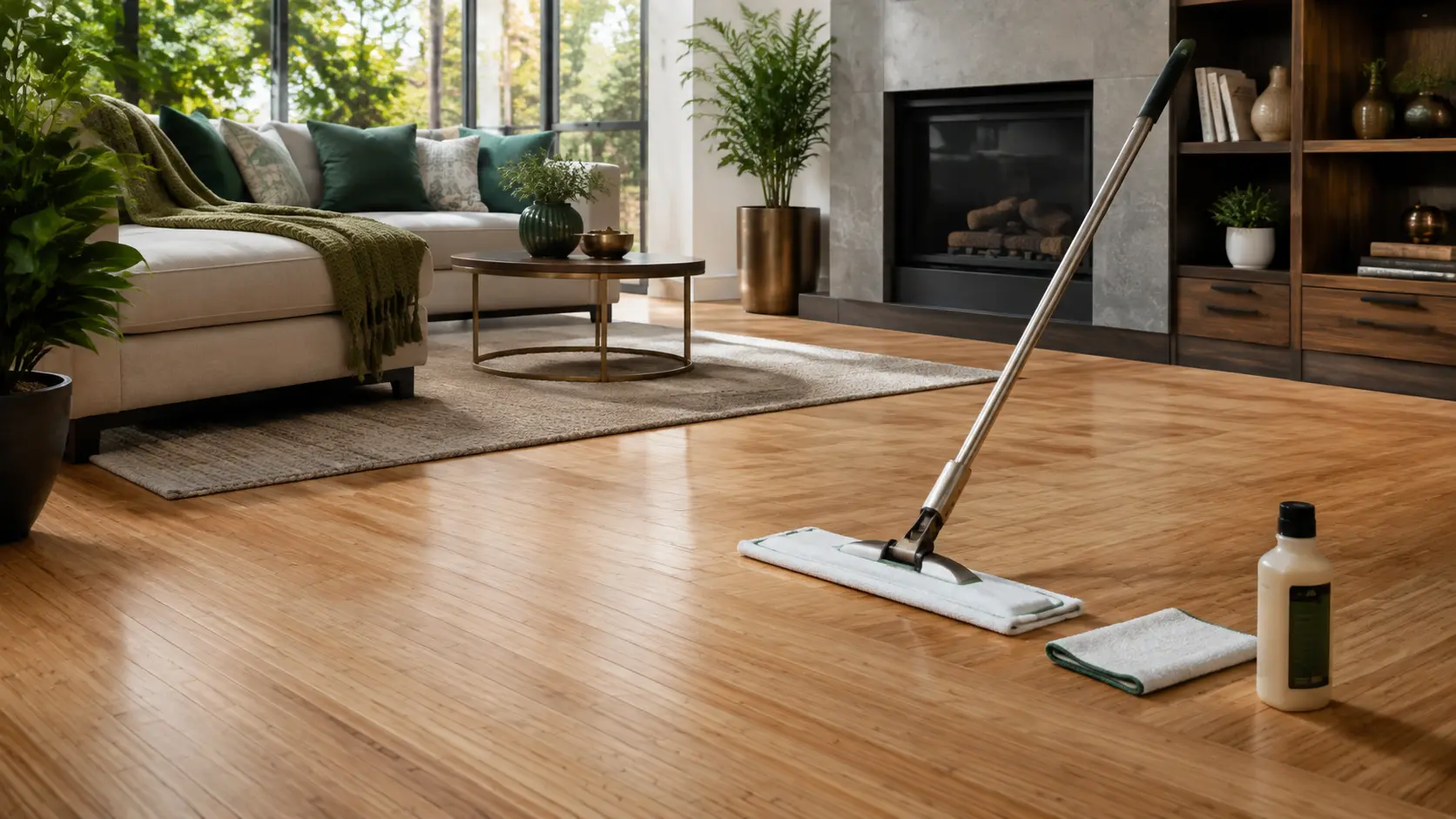
Remove grit with a soft broom, dust mop or vacuum on its hard-floor setting. Lightly mist a clean microfiber pad with the cleaner approved for your floor’s factory finish, mop small sections with the plank direction, leave no puddles, and let the floor dry. Avoid steam, wet mopping, abrasive pads and unapproved polish.
Start with the floor and finish—not a homemade recipe
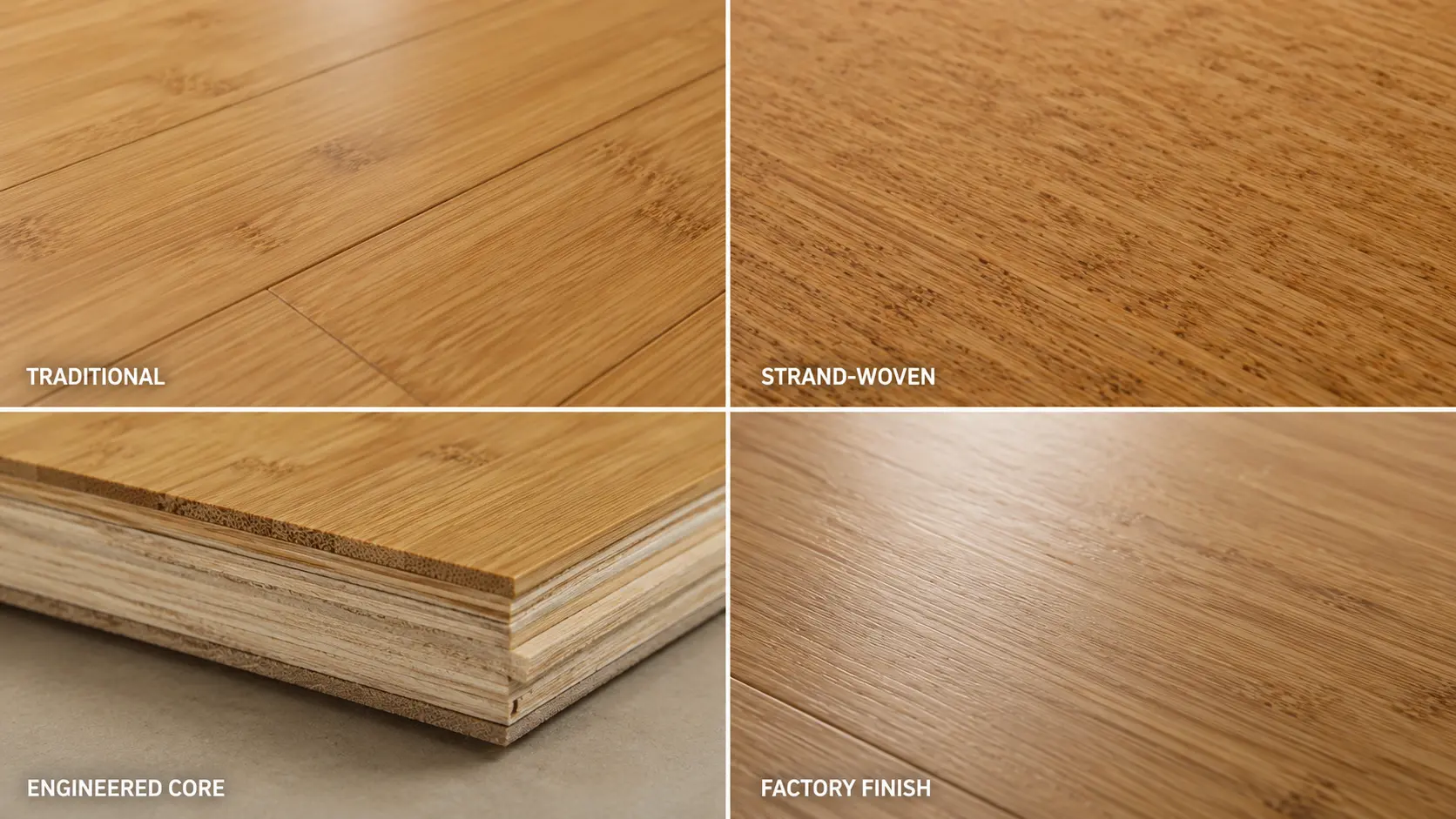
Bamboo flooring can be traditional horizontal or vertical bamboo, dense strand-woven bamboo, solid planks, or an engineered product with a bamboo wear layer over another core. Some floors that look like bamboo are actually laminate or vinyl.
Construction affects moisture behavior and repairability, but the cleaner touches the exposed finish. A factory-cured coating, site-applied polyurethane, oil finish, hardwax oil and bamboo-look resilient surface do not automatically share the same care instructions.
Check your records
Find the carton label, receipt, product page, installation paperwork, finish name, warranty and approved-cleaner list.
If the product is unknown
Use dry cleaning only until a hidden-area test and conservative manufacturer-compatible method can be established. Do not guess with steam, vinegar or polish.
What you need
You need only a few controlled tools for how to clean bamboo flooring; a large bucket and aggressive scrubber make moisture and finish problems more likely.
Safe starting tools
- Soft broom or microfiber dust mop
- Vacuum with beater bar switched off
- Clean microfiber flat mop
- Spare washable mop pad
- Manufacturer-approved cleaner
- Dry absorbent microfiber towel
Do not start with
- Steam mop
- Wet string or sponge mop
- Vinegar solution
- Oil soap, wax or floor polish
- Magic eraser or abrasive pad
- Generic “restore shine” coating
The barely-damp test
- The pad feels evenly damp but releases no drops when pressed.
- The mop leaves no puddled trail or liquid collecting in bevels.
- Any light surface moisture disappears promptly under normal room conditions.
Choose the cleaner in the right order
- Use the exact cleaner named in the installed floor’s manual when available.
- Otherwise, use a product expressly approved by the floor manufacturer.
- If broader cleaner categories are allowed, select a compatible pH-neutral cleaner labeled for the relevant finished wood or bamboo surface.
- If the finish is unknown, contact the manufacturer, retailer or installer before wet cleaning.
Read whether the cleaner is ready-to-use or concentrated, whether it should be sprayed on the pad or floor, and whether the label says no-rinse. Do not create a universal rinse rule that contradicts a product’s instructions.
How to clean bamboo flooring in 7 easy steps
Identify the product and finish
Check the care guide and warranty before selecting water, cleaner, mop or automated cleaning settings.
Remove loose grit
Sweep, dust-mop or vacuum using a soft hard-floor attachment. Turn off the rotating beater bar so grit is lifted instead of dragged.
Prepare clean pads
Start with a clean microfiber pad and keep a spare ready. Wash reusable pads without fabric softener or dryer sheets, following their care label.
Test the cleaner
Apply the approved product in an inconspicuous area. Let it dry and check for residue, color or sheen change.
Use minimal liquid
Lightly mist the pad or a small floor section according to the label. Never pour solution onto the floor or allow it to collect at seams.
Mop controlled sections
Move with the plank direction using overlapping passes. Replace the pad when it turns gray, greasy or begins leaving tracks.
Dry, then inspect
Pick up visible moisture with a dry towel. Let the area dry fully, then inspect from the side before deciding that it needs another product.
Bamboo floor cleaning decision path
Why bamboo floors look hazy or streaky after cleaning
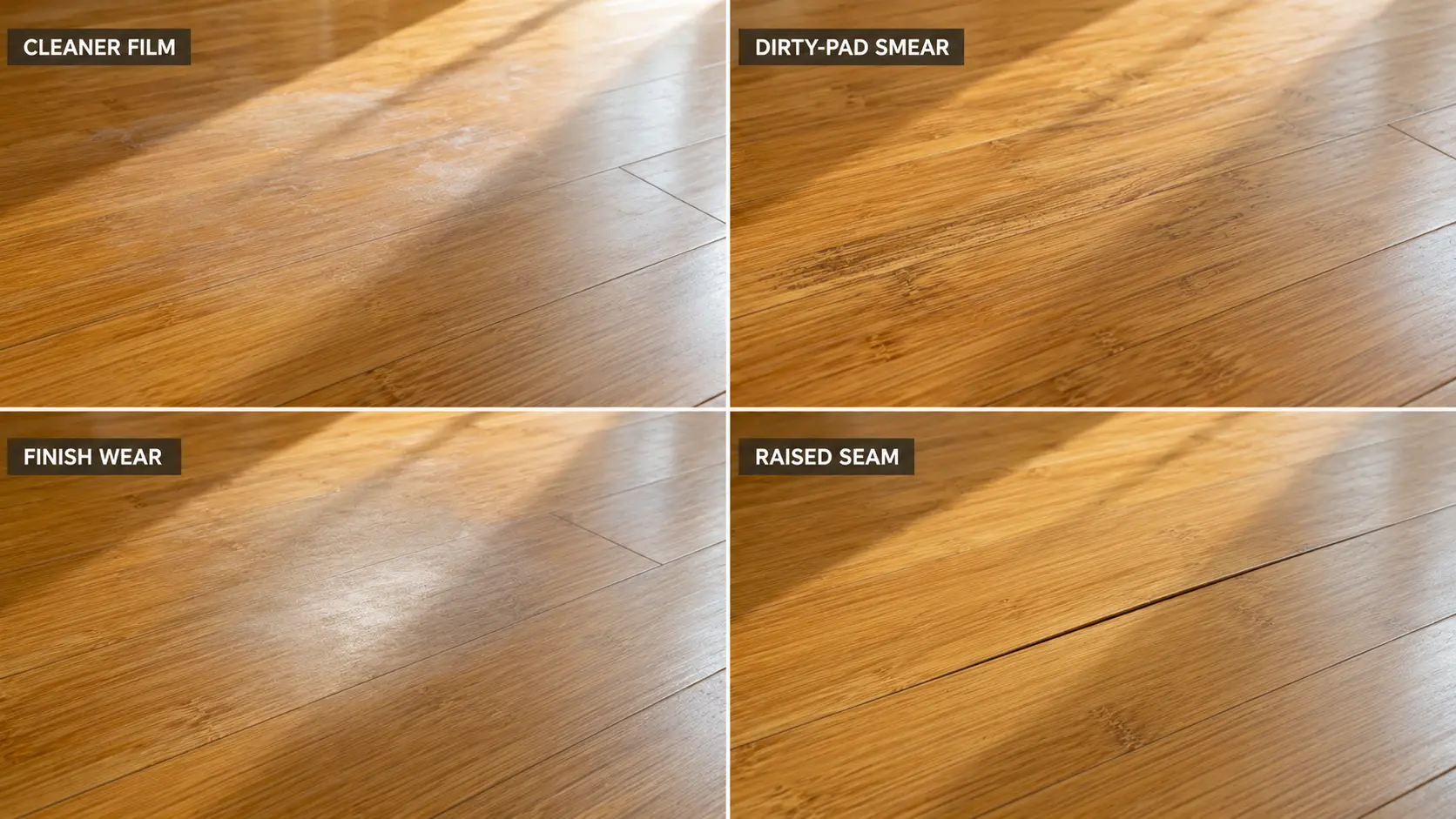
Knowing how to clean bamboo flooring also means knowing when to stop. A cloudy floor is not always dirty. Look at a completely dry section under angled daylight. Notice whether the haze moves under a dry microfiber cloth, follows mop arcs, appears mainly in traffic lanes, sits at seams, or changes the underlying reflection.
| Dry-floor observation | Possible explanation | Safest next action |
|---|---|---|
| Smear follows mop arcs | Dirty pad or redistributed cleaner | Stop and replace the pad |
| Uniform haze improves with a permitted damp pass | Cleaner residue | Complete one controlled residue-removal pass |
| Sticky footprints return | Excess cleaner, oil soap, wax or polish | Identify prior products before adding chemistry |
| Dull lane follows traffic | Finish wear or micro-abrasion | Check warranty; do not polish blindly |
| White line or raised edge at a seam | Residue, swelling or joint movement | Stop wet cleaning and inspect seam height |
| Clear layer flakes or peels | Finish failure | Stop chemicals and contact a flooring professional |
How to handle suspected cleaner residue
First list everything previously used: cleaner concentrates, spray mop refills, dish soap, vinegar, oil soap, disinfectant, polish, wax and steam. Mixing another product into an unknown buildup can make removal harder.
If the floor manufacturer permits a clean-water residue pass, work on a small test area with a fresh, barely damp microfiber pad. Dry it and compare the result. If there is no improvement—or the sheen changes—stop. Widespread wax, polish or oil-soap buildup may require a coating-compatible professional process.
Spot-clean spills without flooding seams
| Mess | Immediate action | Stop condition |
|---|---|---|
| Water or drink spill | Blot immediately, then use the approved cleaner if residue remains | Dark seam or raised edge persists |
| Greasy food | Lift solids, then spot-clean with the approved floor cleaner | Sticky film spreads beyond the spot |
| Pet urine | Blot without driving liquid into seams; follow the floor maker’s sanitation guidance | Odor, dark seam, swelling or finish whitening remains |
| Scuff or rubber transfer | Try a clean dry microfiber cloth, then approved spot cleaner | Reflection changes or color lifts |
| Dried unknown residue | Soften only as allowed by the care guide; never scrape with metal | Deposit will not release with gentle action |
Can you use a robot mop on bamboo flooring?
Use automated wet cleaning only when the installed-floor manufacturer allows it. The robot maker cannot override the flooring warranty.
Robot-mop compatibility check
- The flooring product and finish are known.
- The warranty permits damp or automated cleaning.
- The cleaning solution is approved.
- Liquid output can be kept very low.
- The pad is clean and repeated wet passes are disabled.
- The docking area cannot drip onto one plank or seam.
- No raised edges, gaps or existing moisture problems are present.
If a critical answer is unknown, use dry vacuum mode only until the floor manufacturer confirms compatibility.
What not to use on bamboo flooring
| Method | Why it is a poor default | Better choice |
|---|---|---|
| Steam mop | Heat and moisture may affect the finish, seams and plank stability | Approved low-moisture microfiber method |
| Wet/string mop | Releases uncontrolled liquid | Lightly misted flat mop |
| Vinegar | Acid compatibility varies and may conflict with warranty guidance | Approved pH-neutral cleaner |
| Oil soap | May leave residue or complicate later finish work | No-residue compatible cleaner |
| Wax or polish | Can create buildup or change intended sheen | Confirm finish condition first |
| Magic eraser or abrasive pad | May create a localized dull patch | Soft microfiber and approved spot cleaner |
Cleaner residue or water damage?
Residue generally sits on the finish and may smear or respond to a compatible cleaning test. Moisture damage changes the floor system itself. Cleaning cannot reverse swelling, cupping, raised seams, delamination or a peeling finish.
- Raised, swollen or soft plank edges
- Cupping, crowning or new gaps
- Darkness that remains at a seam after drying
- Peeling, flaking or whitening finish
- Board movement or engineered-layer separation
- A musty odor or evidence of an active leak
Photograph the dry floor in ordinary and side light. Document the cleaner, mop, spill or steam exposure, and contact the installer, manufacturer, insurer or qualified flooring professional as appropriate.
A practical bamboo-floor maintenance schedule
A consistent routine is more important than repeatedly searching for how to clean bamboo flooring with a stronger product. Use breathable entry mats, clean felt pads beneath furniture, suitable floor protectors under rolling chairs, trimmed pet nails and protective runways when moving appliances. Do not drag furniture across the floor.
The best way to clean bamboo flooring
The safest approach to how to clean bamboo flooring is simple: identify the finish, remove grit, use its approved cleaner with a clean barely damp microfiber pad, leave no standing liquid, and inspect only after drying. If haze remains, diagnose residue before adding polish. If seams rise or the finish peels, stop cleaning and investigate moisture or coating damage.
Bamboo flooring cleaning FAQ
What is the best cleaner for bamboo flooring?
Can you mop bamboo flooring with water?
Can you use vinegar on bamboo floors?
Can you steam-clean bamboo flooring?
Can you use Bona on bamboo floors?
Can you use a Swiffer on bamboo flooring?
Why is my bamboo floor hazy after mopping?
Should bamboo flooring be polished?
Can water-damaged bamboo flooring be cleaned back to normal?
Sources and editorial method
This guide follows identify → dry-clean → manufacturer-approved low-moisture clean → dry inspection → diagnosis → stop or escalate. Core references include the Teragren Bamboo Flooring Maintenance and Warranty Guide, Teragren resources, CALI flooring care guidance and Ambient bamboo-floor cleaning guidance. The exact installed-product manual takes priority.
General care information cannot identify a finish, coating failure, leak or structural problem from appearance alone.

