Table of Contents — Tap to Open
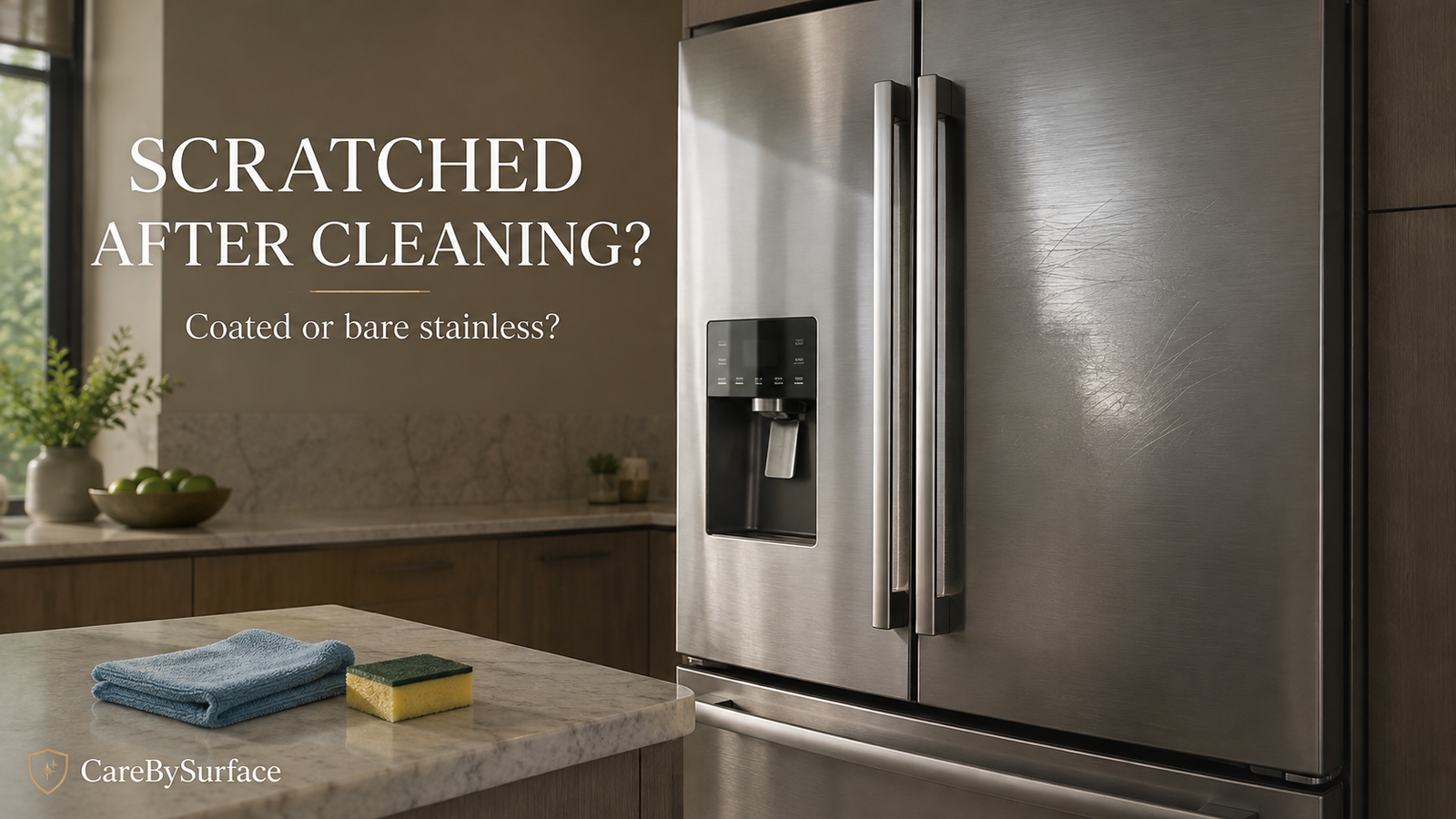
If your stainless steel fridge scratched after cleaning problem appeared after a sponge, abrasive cleaner, cooktop cleaner, adhesive remover or polishing attempt, do not immediately reach for another scratch-removal product.
First determine what surface was actually damaged. A traditional brushed stainless refrigerator door and a fingerprint-resistant clear-coated door may look similar, but the repair methods can be very different. A technique that may reduce a light scratch on bare stainless can permanently worsen a coated appliance finish.
01 Is Your Refrigerator Bare Stainless or Coated Stainless?
Before trying to repair a stainless steel fridge scratched after cleaning, locate the refrigerator model number and exact finish name. Do not decide from visual appearance alone.
Manufacturers use several surface systems that consumers may loosely call “stainless steel.” Traditional brushed stainless, clear-coated fingerprint-resistant stainless and black stainless can all require different cleaning and repair decisions.
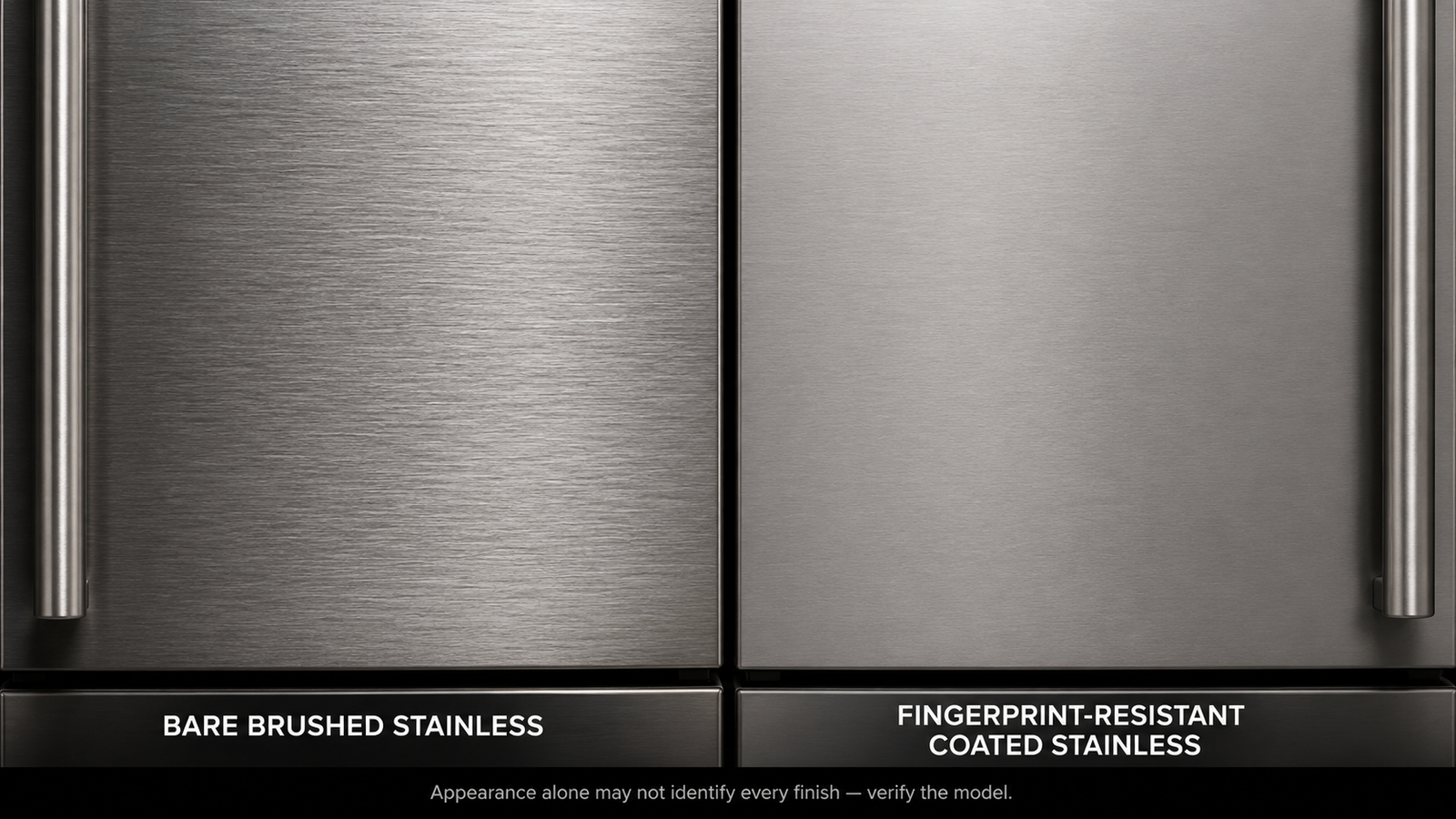
Often shows visible directional factory brushing. Manufacturer instructions may tell you to clean with the grain.
Verify the model before trying any scratch-blending technique.May have a clear protective coating over stainless that reduces fingerprints and changes how the surface should be maintained.
Abrasive polishing may damage the coating instead of repairing it.Frequently uses a separate decorative finish system rather than exposed brushed silver stainless.
Never transfer bare-stainless repair advice automatically.02 Diagnose the Mark Before Trying to Repair It
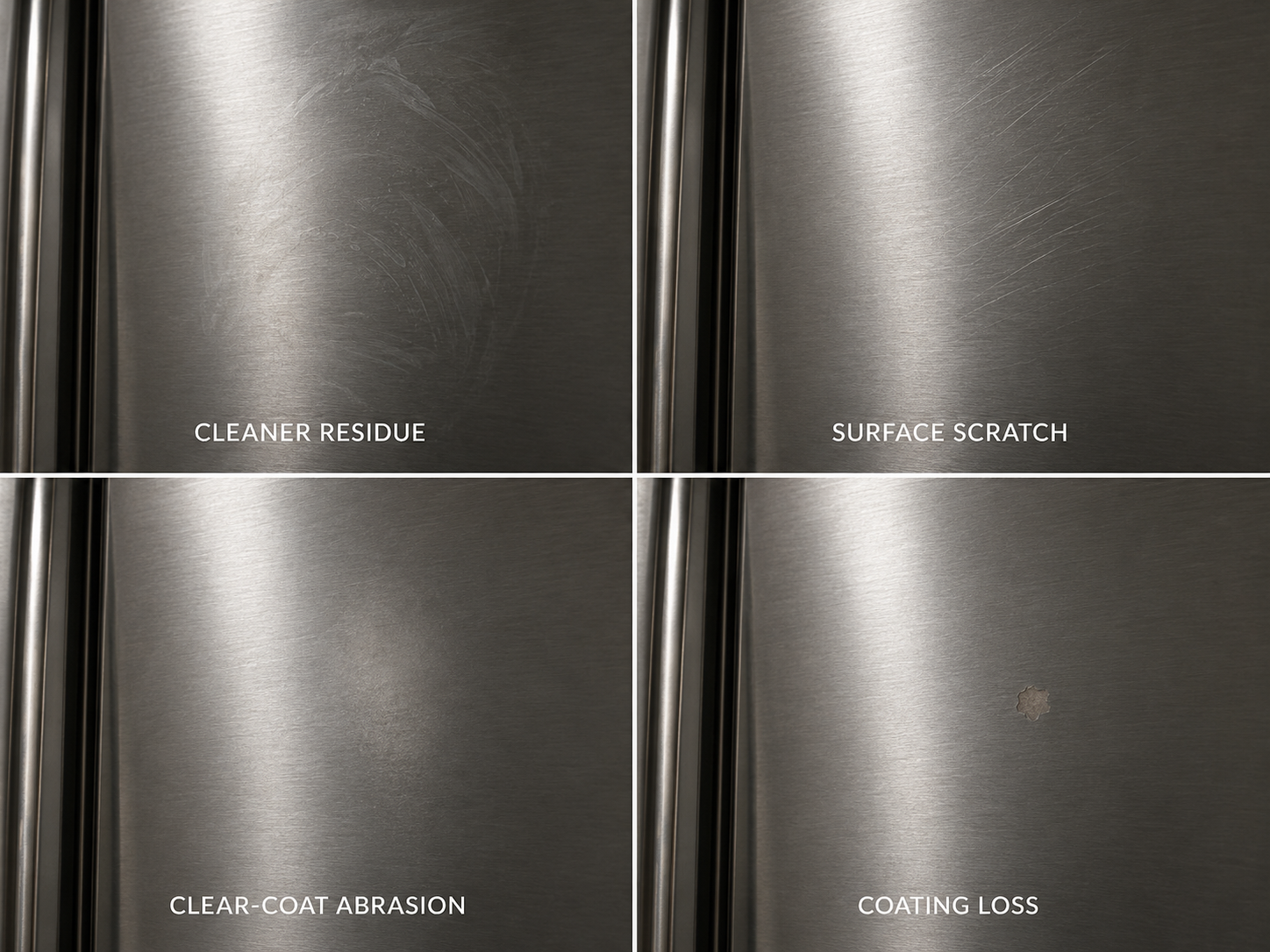
A stainless steel fridge scratched after cleaning does not always have a true scratch. Cleaner film, uneven polish, clear-coat abrasion and actual coating loss can all create a visibly different patch.
| What you see | Possible cause | Repair outlook | Next move |
|---|---|---|---|
| Streaky, oily or smeary haze | Cleaner or polish residue | Often recoverable | Return to the manufacturer’s approved baseline cleaning method. |
| Fine visible lines | Physical abrasion or scratching | Depends on finish type and depth | Identify coated vs bare stainless before further treatment. |
| Cloudy, lighter or dull patch | Clear-coat abrasion or chemical attack | May not be DIY-repairable | Stop abrasive treatment and verify manufacturer guidance. |
| One area much shinier than the rest | Local polishing or changed surface texture | Uncertain | Do not continue polishing simply to make the surrounding area match. |
| Different-colored layer visible | Coating loss or deeper abrasion | Cleaning cannot replace missing coating | Contact the manufacturer or authorized service provider. |
03 Stop These Repair Attempts Until the Finish Is Identified
Many searches for stainless steel fridge scratched after cleaning lead to sanding, Scotch-Brite pads, metal polish, rubbing compounds or attempts to recreate the factory grain.
Those methods can be inappropriate for fingerprint-resistant or otherwise coated stainless steel.
If a clear coat has already been abraded, additional rubbing may enlarge a small cloudy or shiny patch rather than make it disappear.
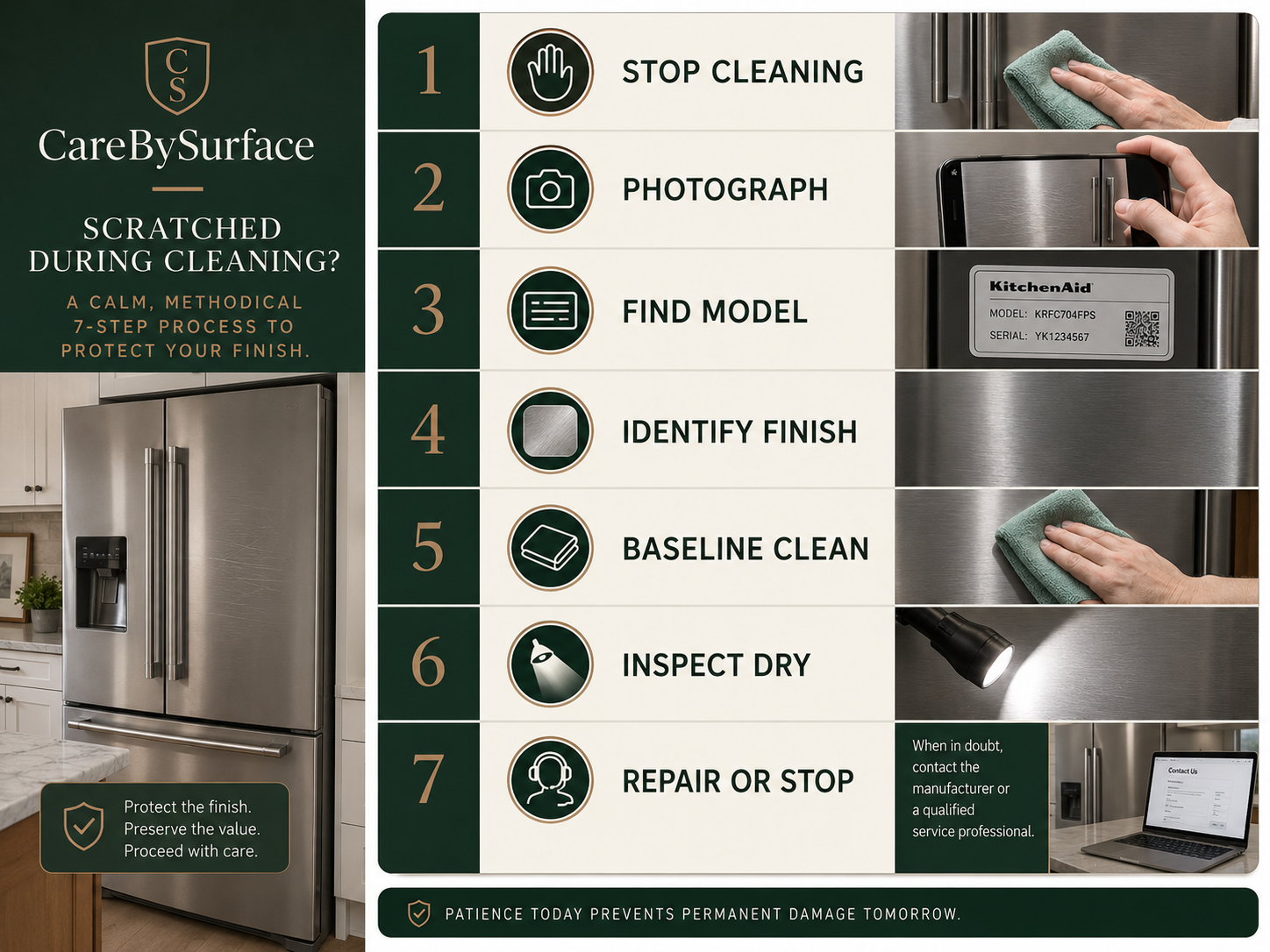
04 7-Step Safe Recovery Guide
Use this sequence when a stainless steel fridge scratched after cleaning suddenly looks cloudy, scratched, shiny or uneven.
Do not continue rubbing in the hope that the damaged patch will eventually become uniform.
Take one full-door photograph plus close-ups under angled light. Record the cleaner, sponge, pad or adhesive remover that was used.
Check the model label, owner’s manual and manufacturer support page. Determine whether the surface is bare, coated, fingerprint-resistant or black stainless.
Where the manufacturer permits it, use its mild cleaning method rather than another abrasive treatment.
Wet stainless or freshly applied polish can temporarily hide scratches and exaggerate differences in reflection.
Separate removable residue from persistent scratches, gloss change, clear-coat abrasion or exposed material.
Escalate only when the refrigerator manufacturer publishes or approves a repair method for the exact finish.
05 If the Fridge Is Fingerprint-Resistant Coated Stainless
This is where a stainless steel fridge scratched after cleaning can become significantly worse if generic stainless scratch-removal advice is followed.
Some fingerprint-resistant stainless finishes use a protective clear coat. Abrasive cleaning can damage that clear coat even when the steel underneath has not been deeply scratched.
- Remove ordinary cleaner residue using approved care only.
- Do not try to recreate the grain with abrasive pads.
- Do not sand through a coated surface.
- Do not repeatedly polish a dull patch.
- Judge the result only when the surface is completely dry.
06 If the Refrigerator Is Verified Bare Stainless Steel
Bare stainless provides a different repair path, but it does not mean that every abrasive technique is safe.
For traditional brushed stainless, manufacturer instructions commonly emphasize nonabrasive cleaning and grain direction. A deeper scratch or gouge is a different problem from cleaner film or a superficial surface line.
If your stainless steel fridge scratched after cleaning is confirmed as bare stainless, determine how deep the scratch is before considering any refinishing.
07 Black Stainless Requires a Separate Decision
Do not treat black stainless as ordinary silver stainless simply because the appliance may contain stainless steel underneath.
If the stainless steel fridge scratched after cleaning is actually a black-stainless model, stop before using polishing pads, sanding or conventional stainless scratch-removal compounds.
Decorative layers and manufacturer-approved repair options differ substantially between brands.
08 Inspect the Dry Door Under Side Light
Angled light makes differences in texture and gloss easier to compare. Inspect the refrigerator only after approved cleaner residue has been removed and the door is completely dry.
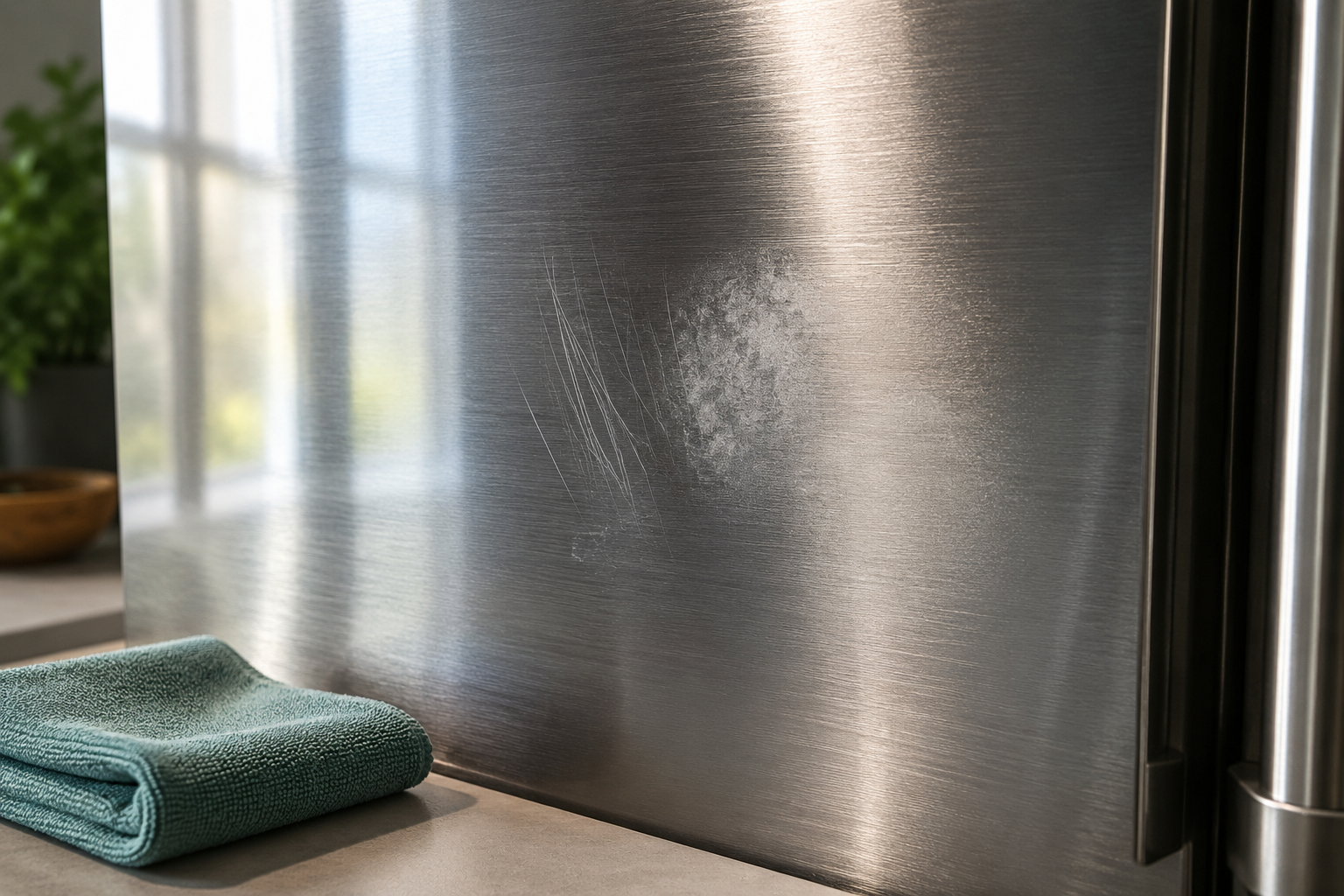
Compare the affected zone with an untouched part of the same door. Look for:
- fine grain lines that stop or change direction;
- a patch that reflects more or less light than the surrounding area;
- cloudiness that remains after approved cleaning;
- visible depth in the scratch;
- a different underlying color;
- a defined edge around a damaged coating.
A removable cleaner film may change dramatically after gentle cleaning. Physical abrasion normally remains as a texture or reflectivity difference.
09 What Can Actually Be Fixed?
The phrase stainless steel fridge scratched after cleaning can describe several levels of damage with very different repair prospects.
Smears, polish film or cleaner streaks.
Outlook: often recoverable with approved cleaning.
Light abrasion with the overall finish still intact.
Outlook: depends strongly on finish type.
Persistent dull, shiny or cloudy patch on coated stainless.
Outlook: DIY polishing may worsen the appearance.
Different layer exposed or significant physical damage.
Outlook: service, refinishing or panel replacement may be needed.
10 Products and Methods to Avoid Until Compatibility Is Verified
| Product / method | Main risk | Why finish type matters |
|---|---|---|
| Scotch-Brite / abrasive pad | Adds directional abrasion | May scratch or dull a fingerprint-resistant clear coat. |
| Steel wool | Severe scratching and possible contamination | Inappropriate for many appliance finish systems. |
| Abrasive powder / BKF-type treatment | Mechanical and chemical surface alteration | Do not assume compatibility with clear-coated stainless. |
| Melamine foam | Mild abrasive action | May alter sheen on decorative coatings. |
| Sandpaper | Removes material | Can remove coating or permanently change factory grain. |
| Automotive polishing compound | Changes gloss through abrasion | Not automatically compatible with appliance clear coats. |
| Bleach / harsh solvent cleaner | Chemical alteration | Protected finishes can have strict chemical restrictions. |
11 When to Stop DIY Repair
Stop treating a stainless steel fridge scratched after cleaning as an ordinary cleaning issue when any of these signs remain:
- The damaged area remains permanently duller or shinier after safe cleaning.
- A different-colored layer or substrate is visible.
- The scratch is deep and strongly catches a fingernail.
- A fingerprint-resistant clear coat appears worn through.
- Continued rubbing enlarges the damaged patch.
- The refrigerator is still under warranty.
- The manufacturer does not provide an approved repair procedure.
Contact the refrigerator manufacturer or an authorized appliance service provider. Ask whether the outer door skin, decorative panel or complete door can be replaced separately before assuming the entire refrigerator needs replacement.
12 How to Prevent Stainless Refrigerator Finish Damage
- Check the exact refrigerator finish before choosing a stainless cleaner.
- Use clean microfiber or another manufacturer-approved soft cloth.
- Avoid the abrasive side of kitchen sponges on decorative appliance doors.
- Do not assume a cooktop cleaner is suitable for a refrigerator.
- On traditional brushed stainless, follow the grain when the manufacturer requires it.
- Check model-specific guidance before removing badges, adhesive or stickers.
- Test a new approved product in an inconspicuous area when the manufacturer recommends testing.
13 Frequently Asked Questions
Can scratches be removed from a stainless steel refrigerator?
Sometimes a light scratch can be made less visible, but the method depends on whether the refrigerator uses bare stainless, fingerprint-resistant coated stainless or another decorative finish. A stainless steel fridge scratched after cleaning should be finish-identified before abrasive repair is attempted.
How do I know if my refrigerator has coated stainless steel?
Check the exact model number and manufacturer documentation. Appearance alone is not reliable because some fingerprint-resistant finishes use a clear protective coating over stainless steel.
Can Scotch-Brite remove scratches from a stainless refrigerator?
Do not use an abrasive pad until the finish is verified. On a clear-coated fingerprint-resistant refrigerator, abrasive pads may scratch or dull the coating and make the damaged patch larger.
Why does my stainless refrigerator look cloudy after cleaning?
Cloudiness may come from cleaner residue, uneven polish, chemical alteration or clear-coat abrasion. Use the approved baseline cleaning method, allow the door to dry completely and inspect it under angled light.
Can I use Bar Keepers Friend on a stainless refrigerator?
Do not assume that an abrasive cleaner is safe simply because the appliance looks like stainless steel. Fingerprint-resistant and coated finishes may prohibit abrasive cleaning. Verify the exact model first.
Can I sand scratches out of a refrigerator door?
Sanding is not a universal appliance repair method. It removes material and can destroy a protective coating or permanently alter the factory grain. Use refinishing only when supported for the exact refrigerator finish.
What if the scratch is on fingerprint-resistant stainless steel?
Start with the manufacturer’s approved gentle cleaning procedure. If the stainless steel fridge scratched after cleaning still has a dull, shiny or abraded patch after residue is gone, stop polishing and contact the manufacturer or authorized service.
Can stainless steel polish hide a scratch?
Polish can change how light reflects from the surface and may make some marks appear less obvious temporarily. That is not the same as restoring a damaged clear coat or replacing removed material. Use polish only when approved for the exact finish.
Repair the Right Surface—not Just the Visible Scratch
When a stainless steel fridge scratched after cleaning develops a cloudy, shiny, scratched or lighter patch, do not immediately sand, polish or re-brush it. Identify the exact appliance finish, remove only approved cleaner residue, inspect the completely dry door under angled light, then separate removable film from bare stainless scratching, clear-coat abrasion or true coating loss. If the manufacturer does not provide an approved repair for the remaining damage, stop DIY escalation before the affected area grows.

