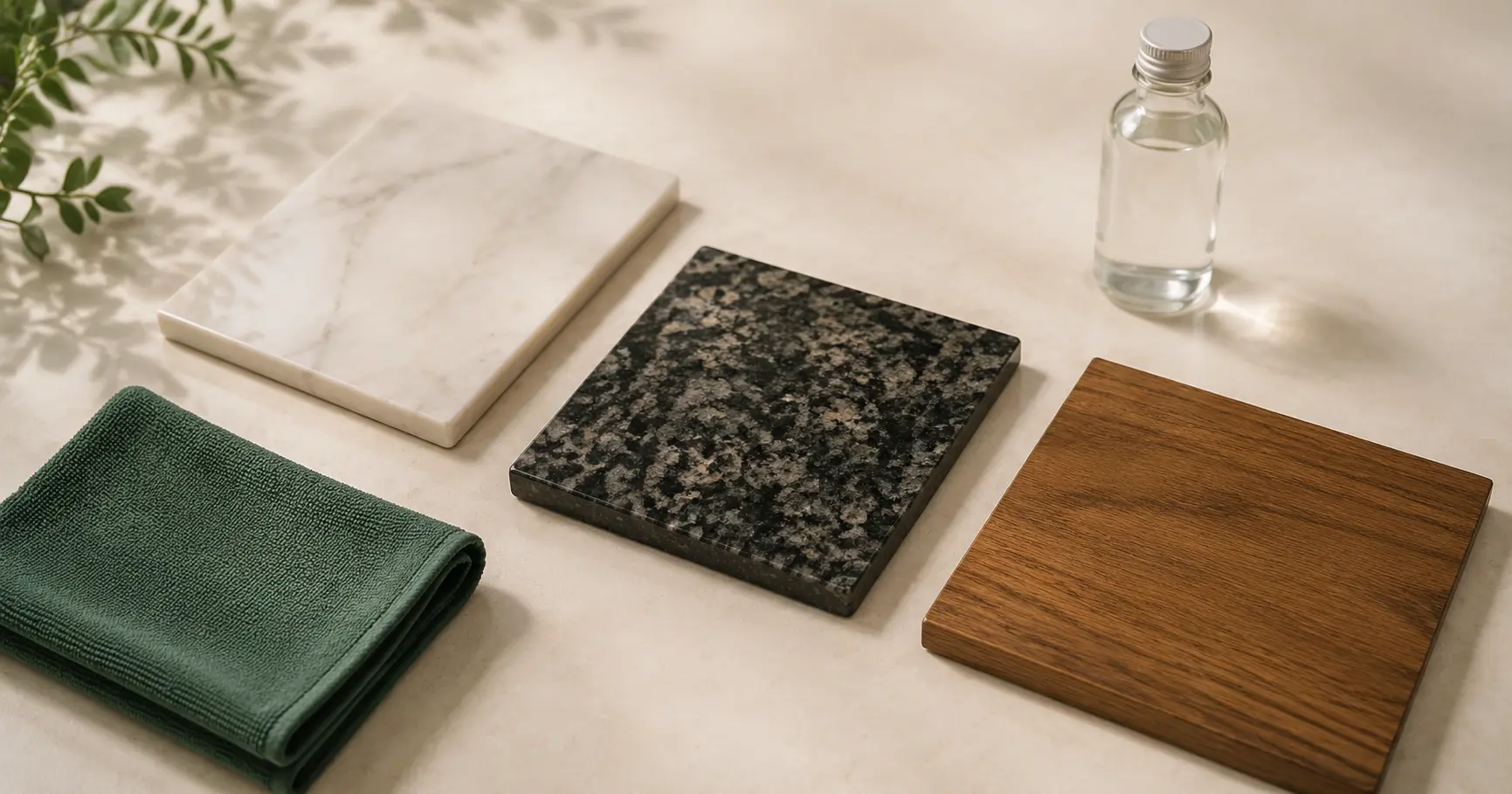
Do not treat vinegar as a universal surface cleaner
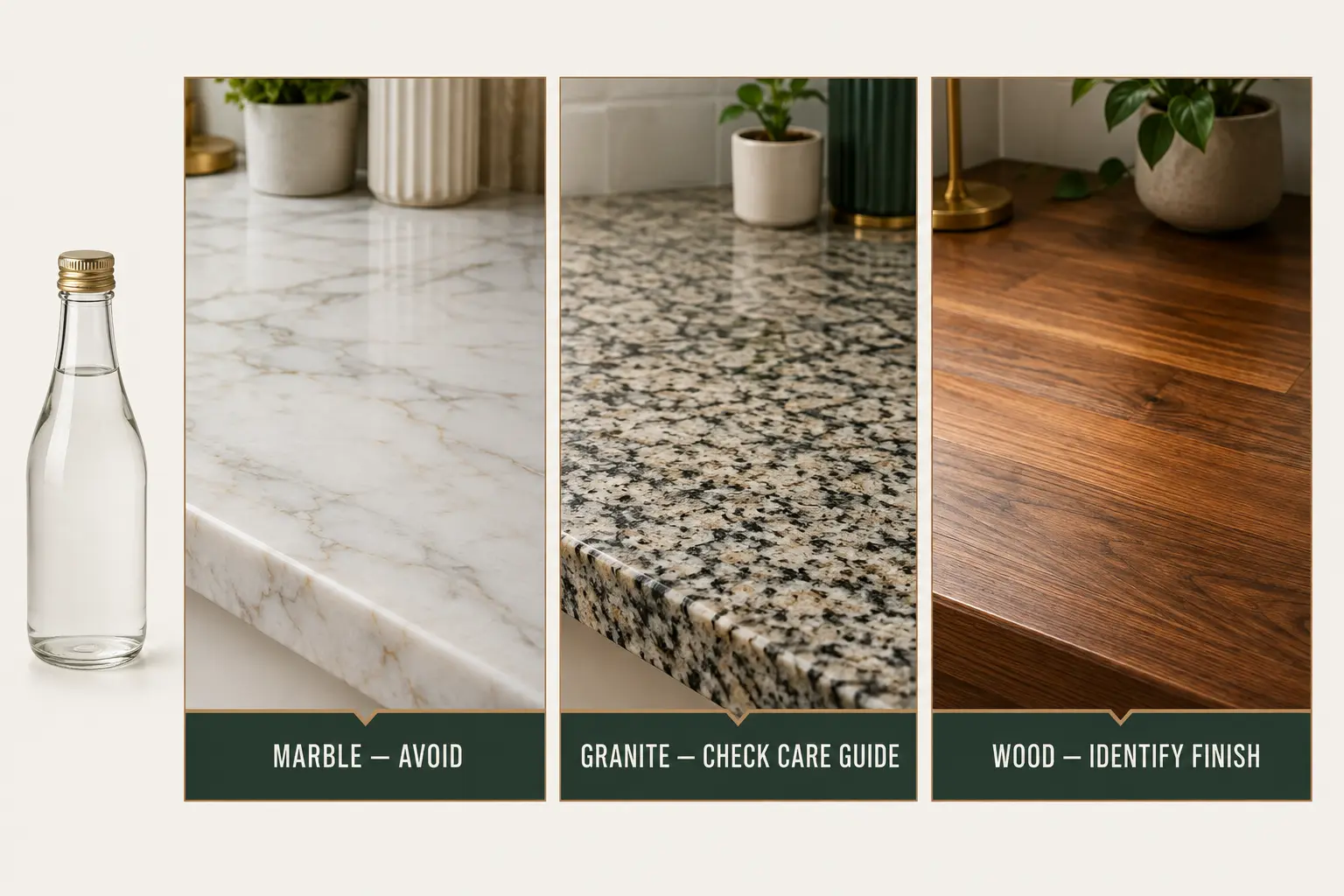
Searching “is white vinegar safe for cleaning marble granite wood surfaces” puts three very different materials into one question. The practical answer is: no for marble, generally avoid it on granite, and wait until you know the finish and its care instructions before using it on wood.
- Marble: vinegar can chemically etch the surface and leave a dull mark.
- Granite: manufacturers commonly advise against vinegar because the stone, sealer and finish may be affected.
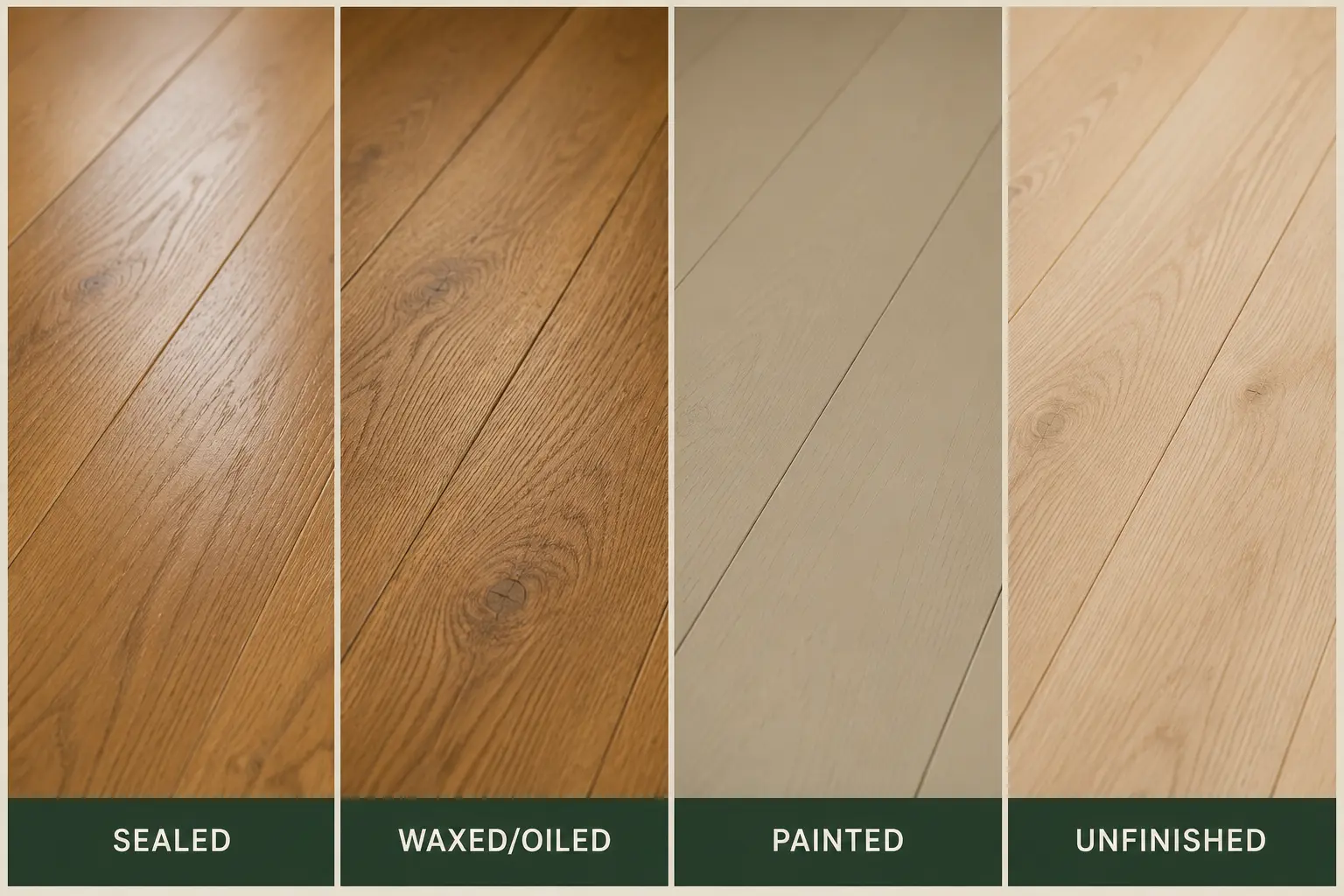
- Wood: the risk depends heavily on whether it is sealed, waxed, oiled, painted or unfinished.
- Safest start: identify the material and finish, then use its approved neutral or material-specific cleaner.
- Stop: if the surface becomes dull, rough, sticky, swollen, pale or visibly different.
White vinegar is cheap, familiar and genuinely handy for some cleaning jobs. That still does not make it safe everywhere. The acid can react with sensitive stone, affect some sealers and coatings, and create avoidable problems on finished wood.
Before reaching for the bottle, pin down three things: the exact material, the finish on top of it, and the problem you are trying to remove. Then check what the maker of that surface actually allows.
Is White Vinegar Safe for Cleaning Marble Granite Wood Surfaces?
Here is the quick comparison:
| Surface | Verdict | Main concern | Safer starting point |
|---|---|---|---|
| Polished or honed marble | DO NOT USE | Acid can react with the stone and produce etching or dullness. | A pH-neutral stone cleaner or current manufacturer-approved method. |
| Granite | GENERALLY AVOID | Risk varies with the stone, finish, sealer and exposure. | Neutral stone cleaner or the fabricator’s approved routine. |
| Sealed hardwood floor | FINISH-DEPENDENT | Repeated acidic or wet cleaning may dull or affect the coating. | A cleaner approved for the exact flooring and finish. |
| Waxed or oiled wood | AVOID BY DEFAULT | Cleaning can alter the protective treatment or appearance. | The finish maker’s maintenance product and instructions. |
| Unfinished wood | DO NOT WET-CLEAN BLINDLY | Absorption may cause staining, swelling or raised grain. | Dry methods or specialist guidance for that object. |
Why Vinegar Behaves Differently on These Surfaces
Vinegar works because it contains acetic acid. On a compatible surface, that acid can help loosen certain alkaline mineral deposits. On acid-sensitive stone or the wrong finish, the very same chemistry becomes the problem.
Marble, granite and wood should therefore not be placed in one generic “hard surface” category:
- Marble is acid-sensitive stone. The acid can change the surface itself, not merely remove dirt from it.
- Granite is a variable natural material. Its minerals, treatment, polish and sealer can differ, so a universal household ratio is not a reliable standard.
- Wood is usually protected by a finish. The relevant question may be whether vinegar is compatible with polyurethane, lacquer, wax, oil, paint or another coating.
A test in a hidden spot can catch an immediate change in color or sheen. It cannot tell you what months of repeated cleaning will do, and it does not override the care instructions or warranty.
Can You Clean Marble With White Vinegar?
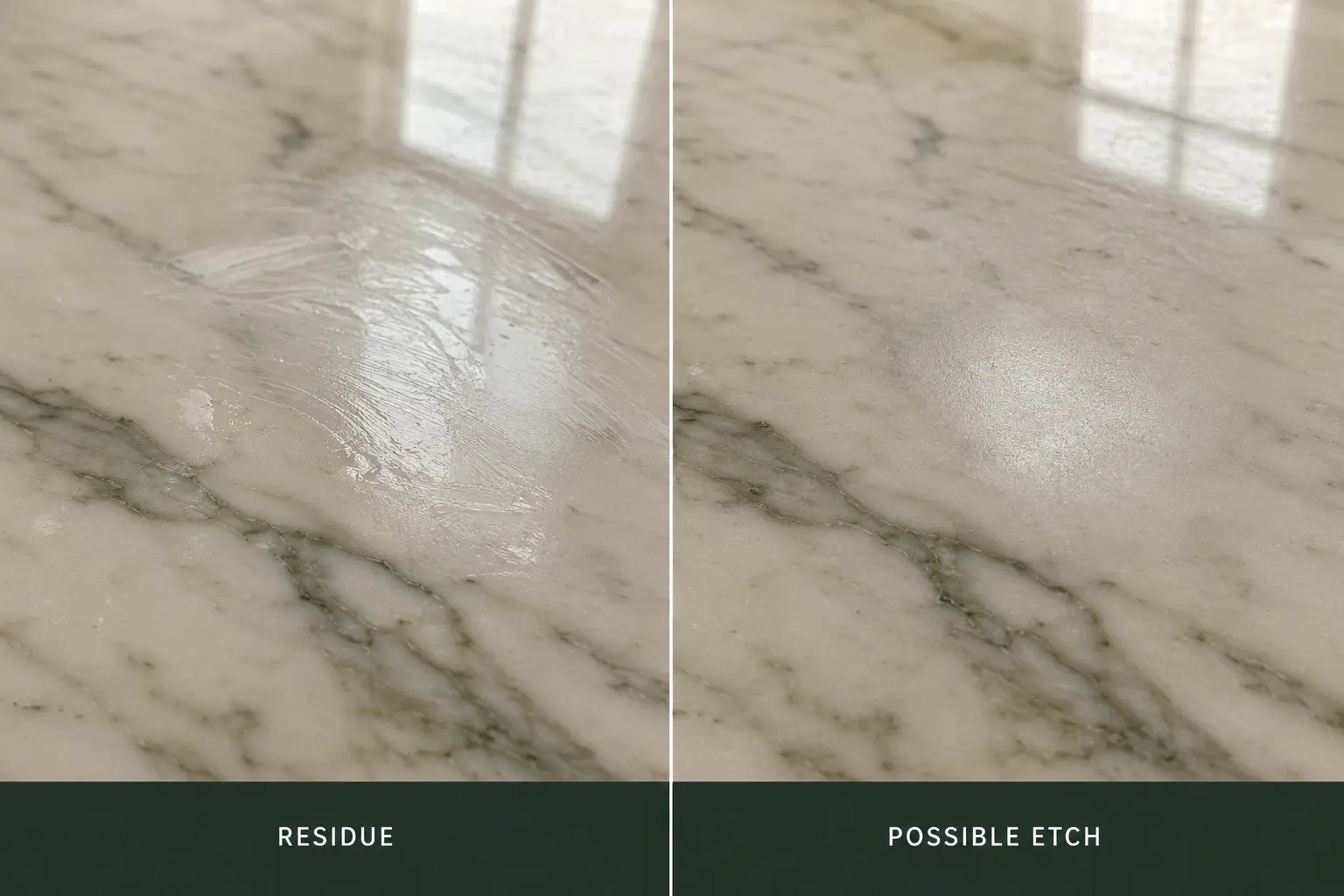
No. White vinegar is not a safe routine cleaner for marble. Much of marble is calcium carbonate, a mineral that reacts with acid. Even a brief contact can leave a patch that looks paler, duller or slightly rough. That mark is called an etch.
The Natural Stone Institute’s stone-care guidance recommends neutral cleaner, stone soap or a mild cleaning approach and warns that vinegar and other acids may dull or etch calcareous stone. MSI’s current marble care instructions also explicitly say not to use vinegar.
If vinegar was just spilled on marble
- Blot or remove the liquid promptly without spreading it farther.
- Use clean water as appropriate to remove remaining acidic residue.
- Dry with a soft cloth.
- Inspect the area under soft angled light after it is completely dry.
- If a dull patch remains, treat it as possible etching—not leftover dirt.
Do not immediately add baking soda, bleach, polishing powder or an abrasive pad. A damaged polished finish may require a marble-specific restoration process or a stone professional, particularly when the mark is large, deep or on a honed specialty finish.
Is White Vinegar Safe for Granite?
For granite, the sensible default is to skip vinegar unless the current care guide for your exact installation says it is allowed.
Granite is not chemically identical to marble, so it is too simplistic to say vinegar always “dissolves granite.” The catch is that natural granite varies, and the finished countertop may also have an impregnating sealer, a topical treatment or a professional polish.
MSI’s granite care guidance lists vinegar among the products to avoid and recommends a gentle routine using water, mild soap where appropriate and a soft microfiber cloth.
If granite looks dull or smeary, acid damage is only one possibility. Soap film, hard-water residue, the wrong polish and uneven sealer can produce a similar look. Work out which problem you have before trying something stronger.
If you are dealing with a particular orange mark, see the CareBySurface guide to removing a rust-colored stain from an engineered-stone countertop. Do not copy its treatment onto granite; use it to understand why material identification must come first.
Can You Use Vinegar on Wood Surfaces?
Knowing that a surface is “wood” is not enough. A hardwood floor, engineered floor, butcher block, cabinet, tabletop and antique can all need different care. The finish matters just as much as the wood underneath it.
| Wood surface | What must be identified | Why vinegar is risky |
|---|---|---|
| Hardwood floor | Factory finish, site-applied finish and flooring brand | Acid and excess moisture may dull or degrade the protective coating. |
| Engineered wood | Wear layer, finish and warranty instructions | Moisture at seams and incompatible cleaner can affect appearance or construction. |
| Furniture/cabinet | Lacquer, polyurethane, wax, oil, paint or unknown finish | The finish may become dull, sticky, pale or uneven. |
| Butcher block | Food-contact finish and maker’s maintenance system | Absorption and finish compatibility differ from sealed furniture. |
| Unfinished/antique wood | Coating history, sensitivity and conservation value | Liquid may penetrate, stain, swell or raise the grain. |
Bruce Flooring advises using products designed for hardwood and avoiding acidic substances such as vinegar because they may strip or damage the finish. The National Wood Flooring Association also cautions that vinegar-and-water cleaning can damage wood floors and finishes over time. [See Bruce hardwood care and NWFA care guidance.]
If a wood floor becomes sticky or hazy after cleaning, do not keep adding vinegar to “cut through” the residue. Start by identifying the cleaner and flooring brand, then follow the approved residue-removal process. This is the same diagnostic principle used in the CareBySurface guide to a black composite sink that develops white haze: removable residue and permanent surface change can look deceptively similar.
What Should You Use Instead of Vinegar?
There is no one homemade mix that is the safest choice for every piece of marble, granite and wood. The replacement has to suit both the material and its finish.
| Surface | Least-aggressive starting option | Check before escalating |
|---|---|---|
| Marble | Neutral stone cleaner or current marble-care instructions | Whether the mark is removable soil, a stain or etching |
| Granite | Fabricator-approved neutral cleaner and soft cloth | Stone type, sealer, finish and care documentation |
| Wood floor | Flooring-manufacturer-approved cleaner with controlled moisture | Brand, construction, finish and warranty requirements |
| Furniture/cabinet | Dry dusting or finish-compatible cleaner | Finish type and whether the surface is already damaged |
Use only a small amount of the correct cleaner. More product can leave more film. Avoid aggressive pads, scouring powders and repeated wet passes unless the exact care instructions support them.
Already Used Vinegar? Follow These Six Checks
One use does not automatically mean the surface is ruined. Put the vinegar away, resist the urge to add a second chemical, and check what actually changed.
Stop using the vinegar mixture
Do not repeat a treatment that may be changing the sheen, color, texture or coating.
Do not “neutralize” it blindly
Adding baking soda, bleach, ammonia or another cleaner can create residue, worsen damage or produce a dangerous reaction.
Remove remaining product safely
Follow the product label and surface-care directions. On compatible stone, this commonly means removing residue with clean water and a soft cloth, then drying.
Let the surface dry completely
Wet stone and wood reflect light differently. Judge the result only after it has dried under ordinary conditions.
Photograph and inspect
Use soft angled light. Record the product, dilution if known, exposure duration and what changed.
Escalate to the right source
Contact the stone fabricator, flooring manufacturer, furniture maker or qualified refinisher when the appearance or texture remains altered.
Residue or Damage? Check the Dry Surface
| What you see | More consistent with | Next decision |
|---|---|---|
| Smeary film that changes after a gentle plain-water wipe | Cleaner residue | Continue only the approved gentle rinse-and-dry method. |
| Dull patch on polished marble | Possible etching | Stop stronger cleaning and seek marble-specific restoration advice. |
| Uneven granite sheen after repeated treatment | Residue, sealer issue or surface change | Check with the fabricator before polishing or stripping. |
| Cloudy wood finish | Residue, moisture effect or finish dulling | Stop wet cleaning and identify the finish. |
| Raised grain, swelling or open seams | Moisture-related wood change | Stop adding liquid and seek flooring or furniture guidance. |
| Sticky, softened or peeling coating | Finish interaction or pre-existing coating failure | Do not scrub; contact the manufacturer or refinisher. |
Never Mix Vinegar With Chlorine Bleach
Do not mix vinegar with chlorine bleach or a household cleaner that contains chlorine bleach. Combining an acid with chlorine bleach can release dangerous chlorine gas.
Do not assume it is safe to combine vinegar with another cleaner simply because each product is sold for household use. Check the complete label, ventilate as instructed and follow emergency directions if fumes, breathing difficulty or eye exposure occurs.
This is especially important after the wrong cleaner has already been used. Pouring a second chemical over the first is not a safe way to undo the mistake.
The CareBySurface Vinegar Decision
For specialty finishes, never transfer a vinegar instruction from an unrelated material. For example, the CareBySurface guide to a PVD faucet finish damaged after cleaning explains why the exact finish and manufacturer instructions must control the recovery path.
When to Stop Cleaning and Get Professional Help
Stop experimenting when:
- a marble area remains dull or rough after residue is removed;
- granite shows an unexplained change in sheen, color or liquid absorption;
- a wood finish becomes sticky, soft, cloudy, pale or patchy;
- wood swells, warps, raises at the grain or opens at seams;
- the affected area is large, valuable, antique or under warranty;
- the product label or manufacturer guidance conflicts with generic online advice; or
- you cannot confidently identify the material or finish.
How to Prevent Vinegar Damage
- Label homemade cleaning bottles with every ingredient.
- Do not use one “all-purpose” spray on every hard-looking surface.
- Keep stone-care and wood-care products separate.
- Save the manufacturer’s current care instructions with purchase records.
- Wipe acidic food spills from natural stone promptly.
- Use controlled moisture on wood and prevent liquid from sitting at seams.
- Inspect a cleaned surface only after rinsing as directed and drying completely.
- Wait until the surface is dry before judging it; water can temporarily hide a dull patch.
Frequently Asked Questions
Does diluting vinegar make it safe for marble?
No universal dilution makes vinegar an appropriate routine marble cleaner. It remains acidic, and official stone-care guidance recommends neutral or marble-compatible cleaners instead.
Can vinegar damage sealed granite?
Granite, its sealer and its finish vary. Many granite suppliers advise avoiding vinegar. Follow the current instructions from the stone supplier, fabricator or sealer manufacturer rather than relying on a generic dilution.
Is vinegar safe on sealed hardwood floors?
Not automatically. “Sealed” does not identify the coating or flooring manufacturer. Several hardwood manufacturers advise against acidic cleaners because they can affect the finish over time.
Can I use vinegar on wood furniture?
Do not use it until you know the finish. Lacquered, waxed, oiled, painted and unfinished wood can respond differently. Start with the furniture maker’s instructions or a finish-compatible method.
What does vinegar damage on marble look like?
Possible etching may appear as a dull, pale or less reflective patch, especially under angled light. Appearance alone cannot confirm the cause, so first remove residue safely and inspect the dry surface.
Can soap and water clean marble and granite?
Some official guidance permits a small amount of mild soap with water for routine cleaning, but excess soap can leave film. Follow the instructions for the exact stone, rinse when directed and dry with a soft cloth.
Should I use baking soda after accidentally using vinegar?
Do not add baking soda or another chemical blindly. Remove remaining product using the surface and product instructions, dry, inspect and contact the appropriate manufacturer or professional if the appearance changed.
Is white vinegar a disinfectant?
Do not assume household vinegar replaces a disinfectant product for situations requiring verified pathogen control. Clean first and use a compatible disinfectant only when the surface manufacturer and product label permit it.
Final Safe Recommendation
Bottom line: keep vinegar off marble. On granite, use the neutral-care method approved by the stone supplier or fabricator. On wood, identify the finish first and follow the flooring or furniture maker’s instructions.
If vinegar has already been used, stop adding products, remove remaining residue as safely directed, let the surface dry and inspect it under ordinary light. When the surface itself appears altered, stronger cleaning is not the answer—move to manufacturer or professional guidance.

