How to Clean Quartz Countertops Safely Without Haze or Finish Damage
If you are learning how to clean quartz countertops, the safest routine is simple: identify the surface, remove grit, wipe with a small amount of mild soap and warm water, rinse with a separate clean cloth, then dry completely. If a mark remains, diagnose it before using a stronger product—because cleaner rules vary by quartz brand and finish.
Quick verdict: clean gently, rinse fully, inspect dry
For ordinary soil, the best answer to how to clean quartz countertops is a soft microfiber cloth or non-abrasive sponge with warm water and a small amount of mild dish soap. Wipe again with clean water and dry. Do not move directly to vinegar, bleach, glass cleaner, abrasive cream or a melamine “Magic Eraser” unless the current care guide for your exact quartz brand allows that product and method.
First, confirm that the countertop is engineered quartz
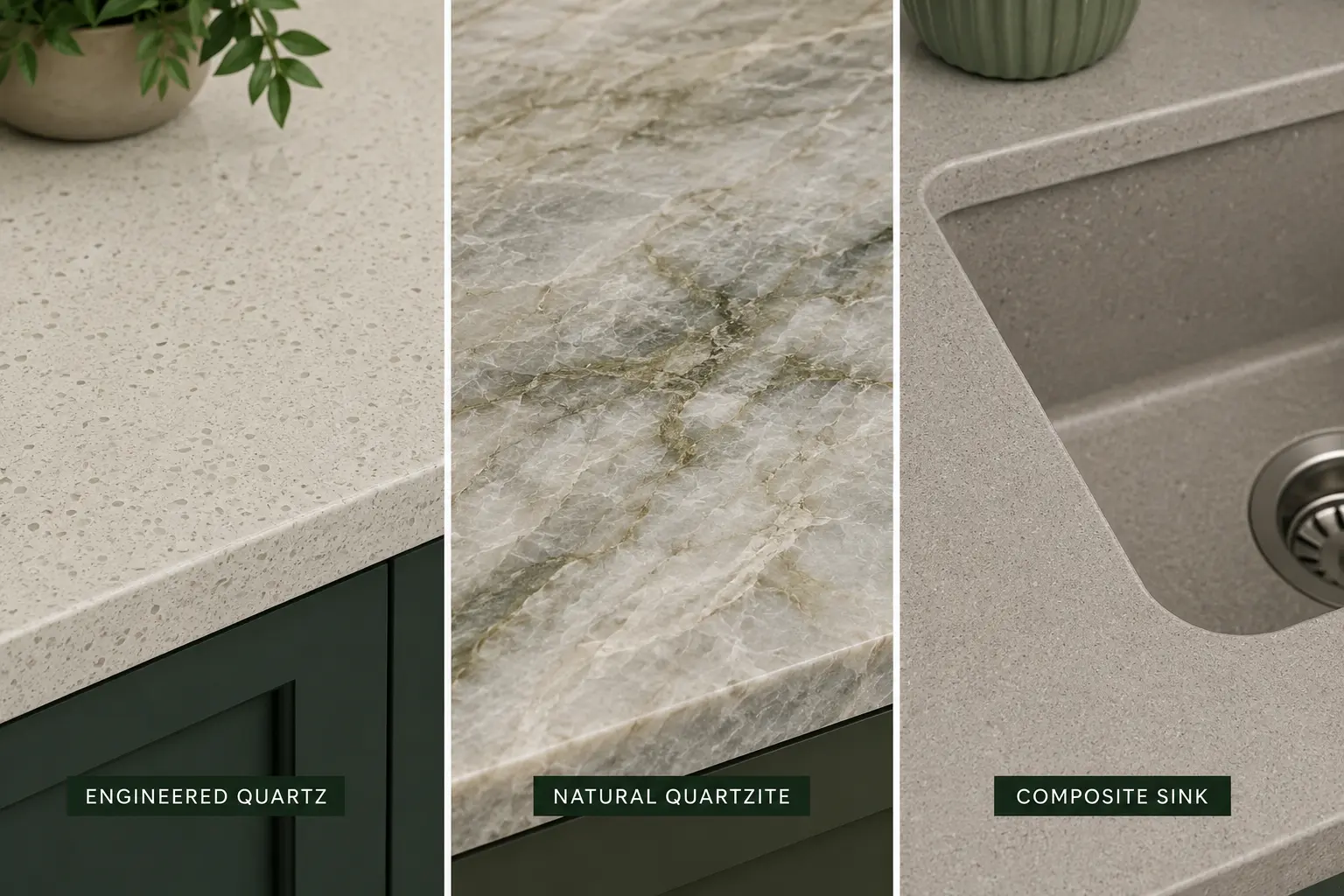
“Quartz” and “quartzite” sound almost identical, but they are not the same surface. Engineered quartz is manufactured from mineral material, pigments and a binding system. Natural quartzite is quarried stone. Their sealing needs, chemical tolerance and repair options can differ, so the wrong identification can turn otherwise reasonable advice into a risky experiment.
This article applies
Usually sold under a manufacturer and color name; generally nonporous and not routinely sealed.
Use a natural-stone guide
Natural veining alone is not proof. Check invoices, fabrication documents or the installer.
Different product system
A molded composite sink is not maintained automatically by countertop instructions.
Fast identification check: look under the counter, inside the sink cabinet, in the renovation invoice or warranty registration for a brand and color name. If you still cannot identify it, stay with the mild baseline and contact the installer before escalating.
What you need to clean quartz countertops
Two clean microfiber cloths
One for washing or rinsing and a separate dry cloth for the final inspection.
Soft non-abrasive sponge
Choose the soft side only; embedded grit can scratch even a “non-scratch” tool.
Mild dish soap
Use a small amount. Excess soap is more likely to leave a visible film.
Warm clean water
Not boiling water. A clean rinse prevents detergent from drying back onto the surface.
Plastic scraper
Only for raised dried residue and only if your manufacturer permits it; keep the angle low.
Current care guide
Confirm the cleaner, dilution, contact time, tool and rinsing directions for your brand.
How to clean quartz countertops in 7 safe steps
This method is designed for routine food soil, fingerprints, light grease and ordinary kitchen residue. It is deliberately less aggressive than many internet “deep-clean” recipes.
Identify the material and finish
Confirm engineered quartz and, if possible, the brand, color and finish. Honed, concrete, natural or rough finishes may show fingerprints and patina more readily than polished quartz.
Clear the counter and remove grit
Lift appliances and containers instead of dragging them. Brush or wipe away crumbs and gritty particles before wet cleaning so they are not moved across the finish.
Prepare a mild cleaning solution
Add only a small amount of mild dish soap to warm water. More detergent does not mean more cleaning power; it can create the very haze you are trying to remove.
Wipe gently and evenly
Dampen—do not flood—a clean microfiber cloth or soft sponge. Wipe the entire working area with light pressure, paying attention to greasy zones near the cooktop and handles.
Soften raised dried food
Hold the damp cloth over dried residue briefly rather than scrubbing harder. If it remains raised, consult the brand guide before using a plastic scraper or stronger cleaner.
Rinse with a separate clean cloth
Wipe again using clean water. Turn and rinse the cloth as it picks up soap. This second pass is essential when the counter looks streaky or cloudy after cleaning.
Dry completely and inspect
Dry with a clean microfiber cloth. View the surface from a shallow angle in consistent light. If the mark changes or disappears, it was likely on the surface; if texture or reflection remains different, stop escalating.
Food-contact caution: this routine cleans visible soil; it is not a universal disinfecting protocol. If disinfection is required, use only a method approved by the quartz manufacturer and the disinfectant label, follow contact time, never mix products, rinse when directed and ventilate the room.
Quartz cleaning decision path
Use this checkpoint after the mild wash, clean-water rinse and complete drying.
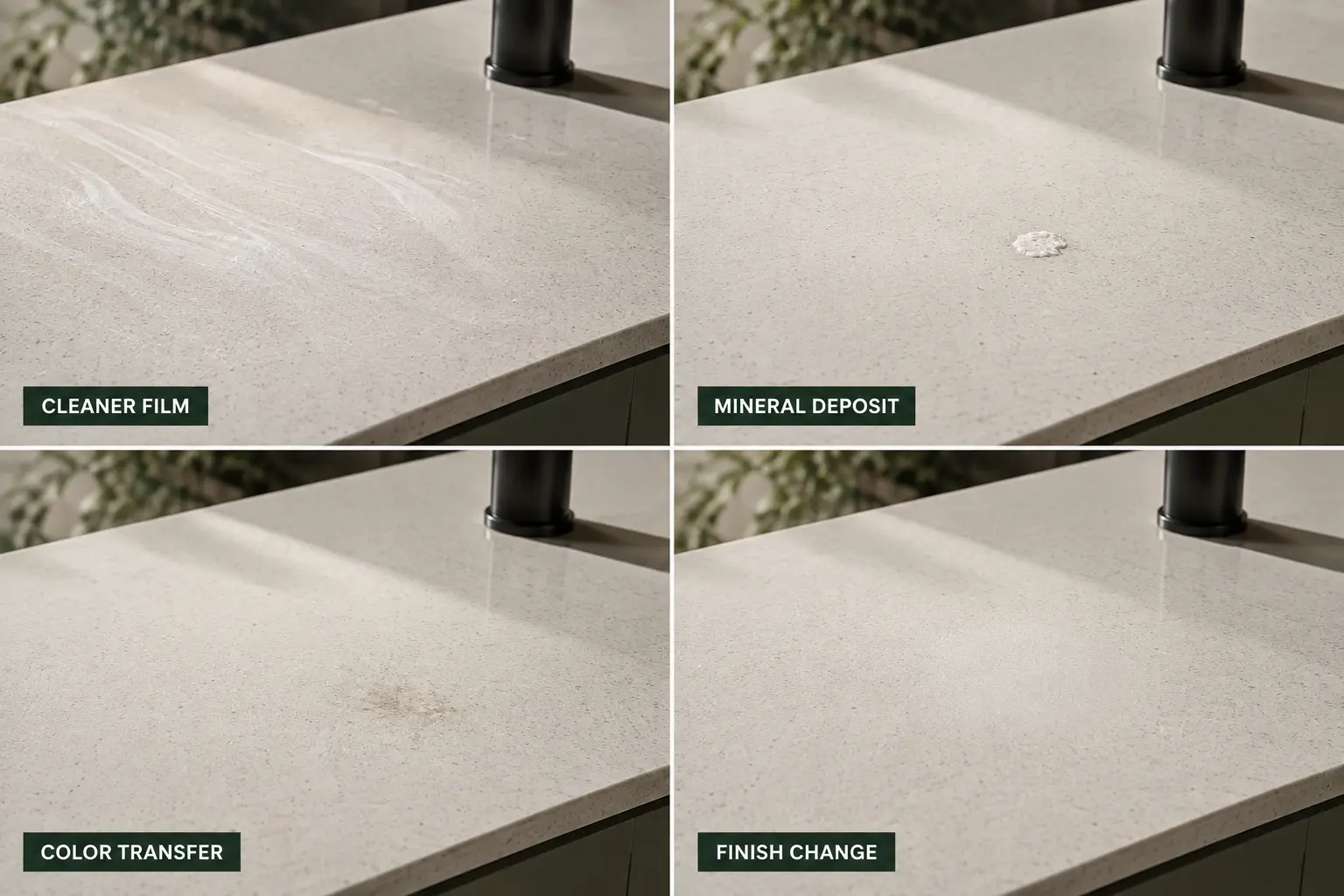
Film, mineral deposit, stain or finish damage?
A persistent mark is not automatically a “stain.” Diagnose its height, texture, location, cleaning history and reflection before choosing a method.
| What you see | More consistent with | Safest next decision | Stop sign |
|---|---|---|---|
| Smeary haze across a wiped area | Soap, cleaner, grease or dirty-cloth film | Clean-water rinse; fresh microfiber; complete drying | No change after a residue-free rinse |
| Raised/chalky ring near faucet or dispenser | Mineral deposit or dried product | Confirm the brand’s approved deposit method | Deposit is flat and reflection has changed |
| Localized color from food, ink or metal | Surface transfer or resin-associated discoloration | Identify the source; use brand-specific spot guidance | Color spreads, surface lightens or gloss changes |
| Flat matte patch visible in angled light | Abrasion, heat or chemical finish change | Stop cleaning; document and seek manufacturer/fabricator advice | Roughness, micro-scratches or larger dull halo |
| Line at seam or edge | Adhesive, fabrication residue, movement or damage | Photograph it; contact installer if new or changing | Opening seam, chip, crack or moisture entry |
Brand guidance changes how to clean quartz countertops
The table is a decision aid, not permission to combine products. Care instructions can change and can differ by finish, color or product family; always open the current guide for your installed surface.
| Brand/status | Routine baseline | Important published distinction | CareBySurface decision |
|---|---|---|---|
| Cambria | Warm water, soft cotton cloth and mild soap if desired | Product-care guidance prohibits bleach, harsh/abrasive pads and topical sealers/treatments | Do not transfer bleach, abrasive cream or sealer advice from another brand |
| Caesarstone | Warm water, mild detergent, non-abrasive cloth/tool; rinse and dry | Publishes approved-product and targeted stain guidance; textured finishes may need more cleaning | Follow the exact surface/finish page, including tool and rinse directions |
| Silestone | Neutral soap and water for daily cleaning | Cosentino says diluted bleach may be used if rinsed; prolonged exposure can create permanent damage | Never convert conditional, time-limited use into an all-purpose bleach routine |
| HanStone | Mild dish soap and water; listed diluted cleaners for light cleaning | Warns against scouring pads and Magic Eraser on its quartz | Treat melamine foam as an abrasive tool, not a chemical-free default |
| Unknown brand | Mild soap, warm water, soft cloth, clean-water rinse and dry | Stronger-product compatibility is unknown | Stop after the baseline; identify the brand or ask the installer before escalation |
Why universal cleaner lists fail: a product allowed for one quartz system or special stain can be prohibited on another. Concentration, dwell time, pressure, finish and complete rinsing matter as much as the ingredient name.
What to do about common quartz-cleaning problems
Greasy film or fingerprints
Begin with the seven-step method using less soap than you think you need. Change the rinse water and cloth if the surface becomes streakier as you work. Matte, concrete and textured finishes can display fingerprints more readily, so judge improvement across a larger evenly cleaned area rather than rubbing one spot repeatedly.
Dried food or sticky residue
Rehydrate the deposit with a warm damp cloth. Avoid digging at it with metal. A low-angle plastic scraper may be acceptable on some products, but check the current care guide first—especially near seams and edges.
White quartz discoloration
White backgrounds make food pigment, metal transfer, adhesive, hard-water deposits and resin changes easier to notice. Photograph the dry mark, note what caused it and route it by the diagnostic table. Do not assume more scrubbing is the answer simply because the base color is white.
Hard-water spots
If the spot feels raised or chalky and sits near a faucet, it may be mineral buildup. Acid tolerance differs by manufacturer: Caesarstone publishes targeted vinegar/scale-remover guidance in some markets, while other brands prohibit acidic or unapproved products. Use the procedure for your exact surface, not a generic vinegar ratio.
Ink, marker or colored transfer
Some brands publish alcohol or approved-cleaner procedures for particular marks. Apply the product to a cloth when directed, limit exposure, use light pressure, rinse and dry. If color remains without anything raised on the surface, stop before escalating to acetone or an abrasive.
Dull patch after Magic Eraser, abrasive cream or strong chemical
A melamine pad can abrade a glossy surface, and incompatible or prolonged chemical exposure can change the binder or finish. If a clean-water rinse does not change the dry reflection, more cleaning may enlarge the dull area. Document it and contact the brand, fabricator or installer.
What not to use on quartz without manufacturer approval
- Steel wool, rough scrub pads or abrasive powder: they can scratch or change sheen.
- Magic Eraser by default: melamine foam is mildly abrasive; HanStone explicitly warns against it.
- Undiluted or routine bleach: brand instructions conflict and exposure time matters.
- Universal vinegar recipes: some brands permit targeted diluted use; others advise against acids.
- Oven, grill, drain, paint-stripper or furniture-stripper products: these are not countertop cleaners.
- Wax, topical polish or sealer: engineered quartz normally does not need routine sealing or re-polishing, and topical treatments may create uneven haze.
- Metal blades or aggressive scraping: they can scratch and damage seams or edges.
- Hot pans and countertop appliances without protection: engineered quartz is heat-resistant, not heat-proof; use a trivet.
Never mix household cleaners. In particular, mixing bleach with acids or ammonia can release dangerous gases. Rinse away one product completely before considering any different manufacturer-approved treatment.
How to clean quartz countertops between deeper maintenance checks
After cooking
Remove spills and food residue promptly; rinse and dry high-visibility areas.
Every day as needed
Use the mild baseline where food preparation, fingerprints or grease require it.
Weekly
Lift countertop items, clean underneath and inspect seams, faucet zones and appliance heat areas.
Always
Use cutting boards, trivets and coasters; lift heavy objects instead of sliding them.
When products change
Recheck the quartz manufacturer’s current cleaner and disinfectant guidance.
When appearance changes
Photograph dry, stop aggressive cleaning and diagnose before trying another product.
When cleaning should stop
Contact the manufacturer, installer or an experienced quartz fabricator when a dry patch remains dull or rough, color changed after heat or chemicals, scratches multiply during cleaning, or the issue involves a seam, edge, chip or crack. Cleaning removes material sitting on the surface; it cannot reliably reverse a changed factory finish, resin damage or structural movement.
If the counter is newly installed, document the entire dry surface in consistent light before attempting stronger products. Installation adhesive, fabrication residue, surface anomaly and cleaning film require different remedies—and warranty evidence is easier to evaluate before repeated DIY treatment.
Frequently asked questions
How to clean quartz countertops safely every day?
For routine cleaning, start with warm water, a small amount of mild dish soap and a clean soft cloth or non-abrasive sponge. Rinse with a separate clean damp cloth and dry. Stronger products should come from the current care guide for your exact brand and finish.
How do you clean quartz countertops without streaks?
Use less soap, avoid a greasy or overloaded cloth, rinse with clean water and dry immediately with fresh microfiber. If haze remains, repeat one water-only rinse before introducing another cleaner.
Why does quartz look cloudy after cleaning?
Soap, cleaner, grease or hard-water minerals can leave a visible film. A flat dull area that does not change after a complete rinse and drying may instead be abrasion or chemical/heat-related finish change.
Can you use vinegar on quartz countertops?
There is no reliable universal yes or no. Caesarstone publishes targeted diluted-vinegar guidance for some situations, while other brands restrict acids or unapproved products. Use vinegar only when the current instructions for your exact product allow the concentration, contact time and rinse method.
Can you use bleach on quartz countertops?
Not as a universal routine. Cambria prohibits bleach, while Silestone and Caesarstone publish limited or product-specific bleach guidance. Identify the brand first, follow its exact dilution/contact-time instructions and never mix bleach with another cleaner.
Can you use Windex or glass cleaner on quartz?
Only if the manufacturer approves that exact cleaner type. Formulas differ, and some guidance warns that prolonged or high-pH exposure may discolor or dull a surface. Mild soap and water remain the safer unknown-brand baseline.
Is a Magic Eraser safe on quartz?
Do not assume so. Melamine foam cleans partly through mild abrasion, and HanStone specifically warns against Magic Eraser on its quartz. It can leave a larger dull patch on some finishes.
How do you clean white quartz countertops?
Use the same mild wash, rinse and dry routine. Because white quartz reveals colored transfer easily, identify whether the mark is raised residue, mineral deposit, pigment transfer or a flat finish change before selecting a stronger brand-approved treatment.
Do quartz countertops need sealing or polishing?
Engineered quartz generally does not need routine sealing, and its factory finish is not maintained like polish on natural stone. Avoid topical sealer, wax or polish unless the surface manufacturer explicitly specifies it.
How can you tell quartz from quartzite?
Do not rely on appearance alone. Check the invoice, warranty, underside label, brand/color name or installer records. Quartz is engineered; quartzite is natural stone and requires its own care guidance. See our quartzite-cleaning guide.
Final safe recommendation
The best way to clean quartz countertops is to keep the first pass simple and the next decision evidence-based. Use mild soap, warm water and a soft cloth; rinse completely; dry; then inspect. If something remains, identify whether it is film, deposit, transferred color or changed finish—and consult the exact manufacturer before increasing chemistry or abrasion.
For a specific orange mark, use our guide to removing rust stains from quartz. If your surface is natural stone rather than engineered quartz, switch to the quartzite countertop guide. Browse more material-specific advice in Quartz & Engineered Stone.
Manufacturer sources and review method
This guide compares current public manufacturer instructions and uses the least-aggressive shared baseline where product rules differ. Always recheck the guide associated with your installed product.

