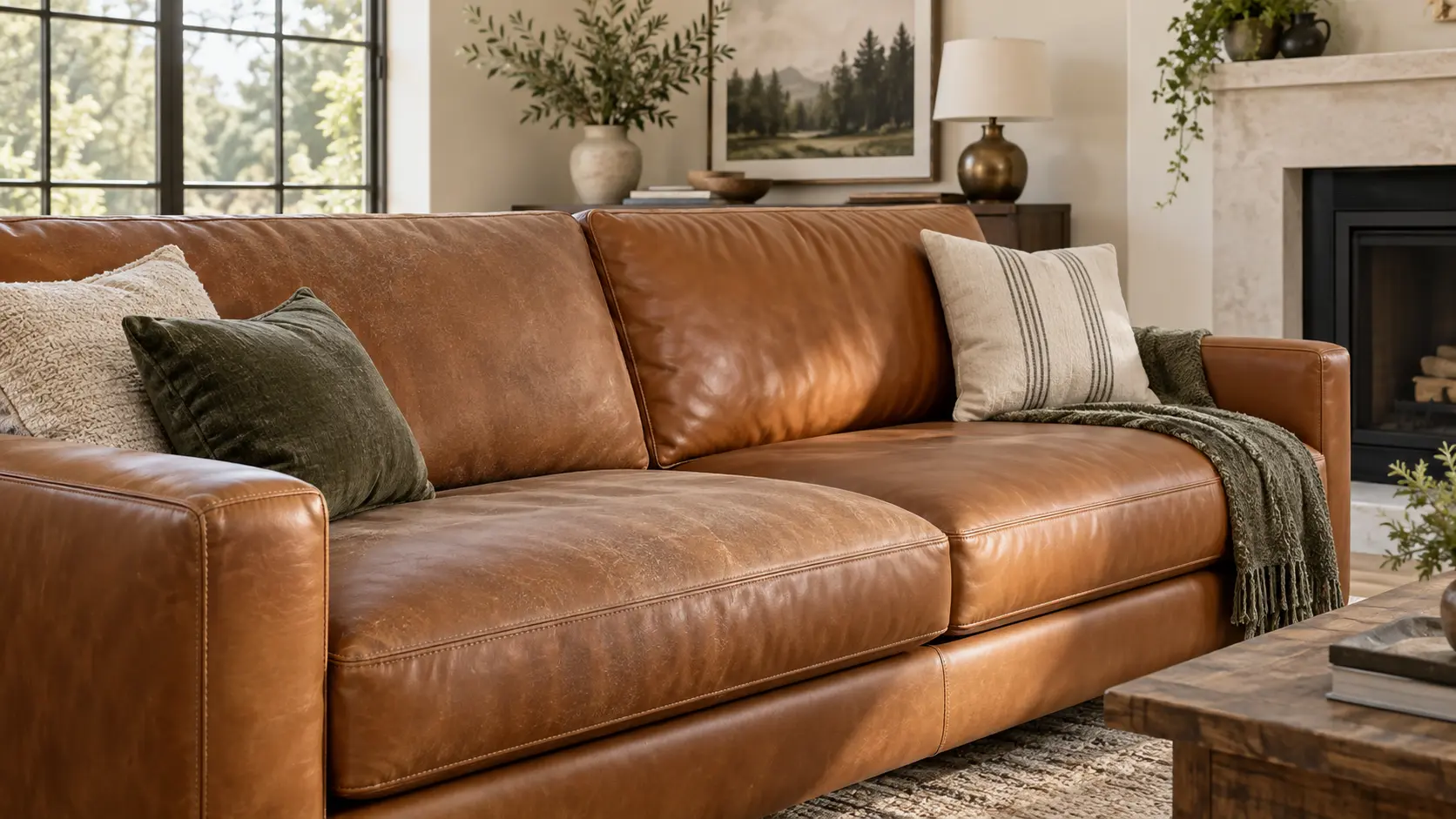
If you are deciding how to clean a leather couch, start with its finish—not a homemade recipe. This guide shows how to remove routine soil with the least moisture possible, check the dry result, and recognize marks that cleaning cannot safely fix.
Quick answer: how to clean a leather couch safely
First identify the couch maker and leather finish. Vacuum with a soft brush, wipe with a dry white cloth, then use only the cleaner and moisture level the care guide permits. Apply product to the cloth, work lightly, air-dry, and stop if color transfers, the leather darkens unevenly, or the finish becomes sticky.
This material-first approach follows the same principle used throughout CareBySurface’s surface-care guides: identify the surface and its finish before choosing a cleaning chemistry.
Identify the couch before you clean it
A smooth brown couch may be pigmented leather, semi-aniline leather, absorbent aniline leather, bonded leather or a synthetic lookalike. They can respond very differently to moisture and conditioner. Appearance is only a clue; the label, invoice, model page or manufacturer is better evidence.
| Surface | Typical behavior | Safe first action | Wet-clean permission |
|---|---|---|---|
| Protected or pigmented leather | Usually has a protective color/finish layer and more uniform appearance. | Soft-brush vacuum and dry white cloth. | Often accepts a maker-approved leather cleaner or lightly damp method, but verify the exact guide. |
| Semi-aniline leather | Some protective finish with more natural variation. | Dry clean first and find the model-specific instructions. | Conditional; use only the maker-approved product and minimal moisture. |
| Pure aniline leather | Natural-looking and absorbent; liquid may darken it. | Dust gently with a clean dry cloth. | Do not assume. Some supplier care codes restrict cleaning to dry dusting or specialist care. |
| Nubuck or suede | Velvety nap rather than a smooth protected surface. | Use only the maker-approved brush/process. | Do not use the smooth-leather method; specialist care is often safest. |
| Bonded, faux or coated synthetic | A coating or synthetic layer may peel, crack or react to leather products. | Check the upholstery label and maker guide. | Follow the synthetic/coated-material guide; do not add real-leather conditioner by default. |
| Unknown | The response to water or cleaner cannot be predicted safely. | Vacuum and dry dust only. | Wait until the material and approved method are confirmed. |
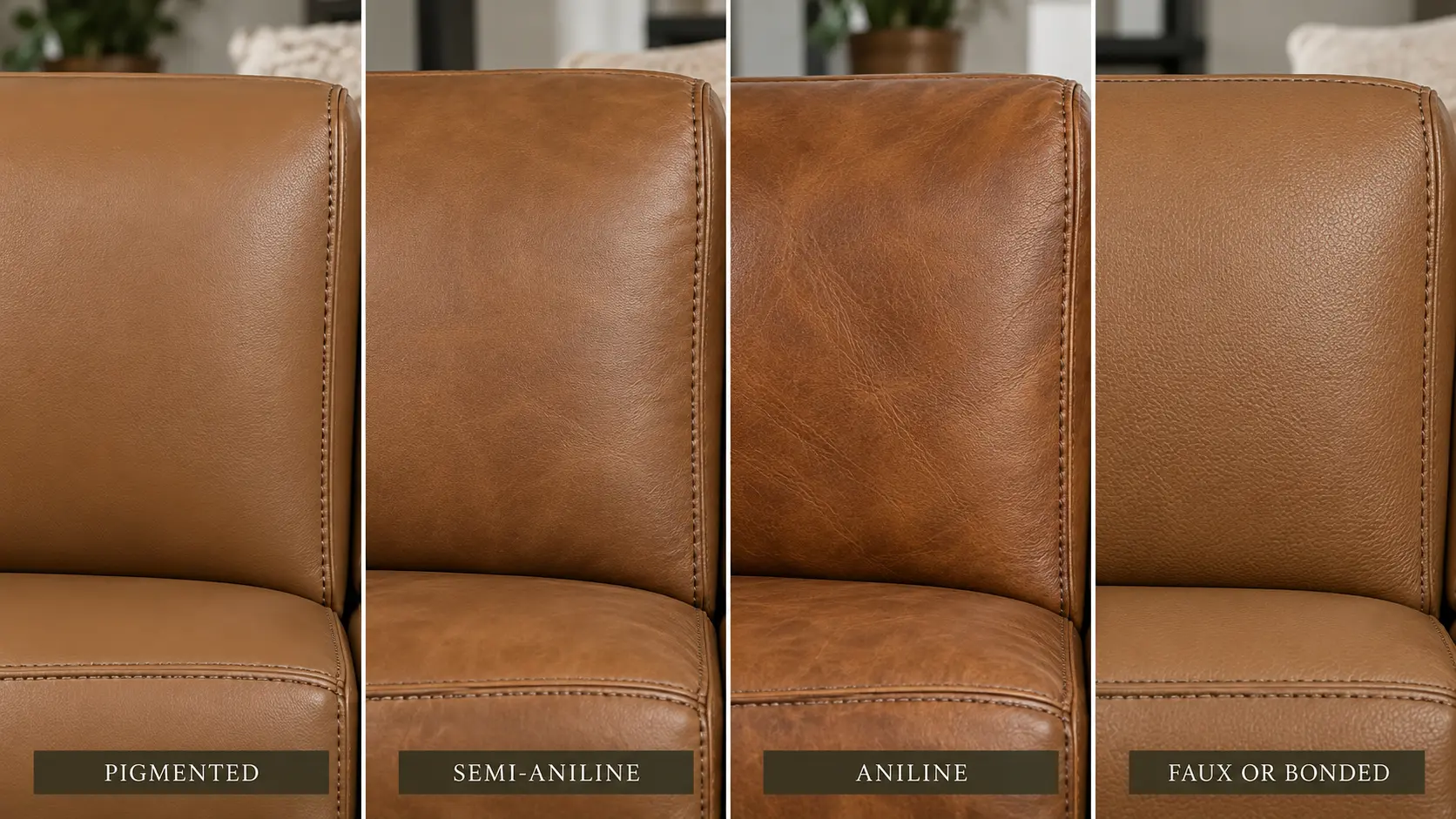
Technical care guidance from Cortina Leathers illustrates why this distinction matters: some pigmented leathers permit a damp-cloth or mild-soap process, while certain pure aniline care codes call for dry dusting and prohibit oils, saddle soaps, conditioners and general cleaners. That is why no household recipe belongs at the top of a universal guide.
Tools and supplies
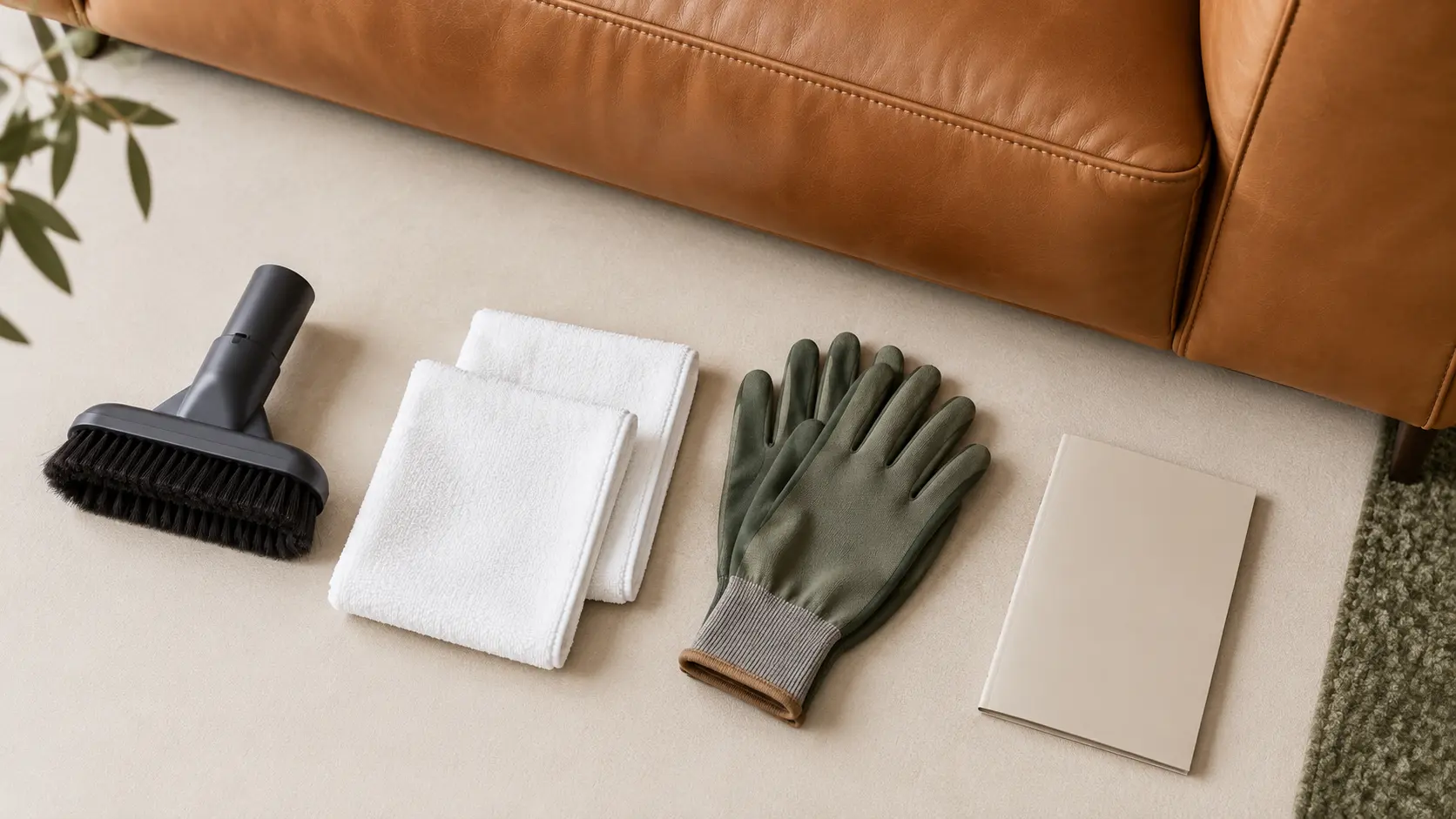
Soft vacuum brush
Removes grit from seats, seams and piping before it can scratch during wiping.
White microfiber cloths
Use one dry and one only as permitted. White fabric makes dye or pigment transfer easier to notice.
Maker-approved cleaner
Match the product to the exact couch or leather group. A generic “leather safe” claim is not the same as maker approval.
Distilled water
Use only when the care guide calls for water; it may reduce mineral residue compared with hard tap water.
Phone camera
Photograph the mark and overall color before testing, then compare only after the leather is fully dry.
Care guide and model
Keep the current product page, warranty and cleaning directions open while you work.
How to clean a leather couch in seven safe steps
Confirm the material and permission
Find the brand, model and leather group. Read the current care guide and warranty. If it says professional cleaning only, stop there. Do not infer wet-cleaning permission from color, price or the words “genuine leather.”
Look at the mark before touching it
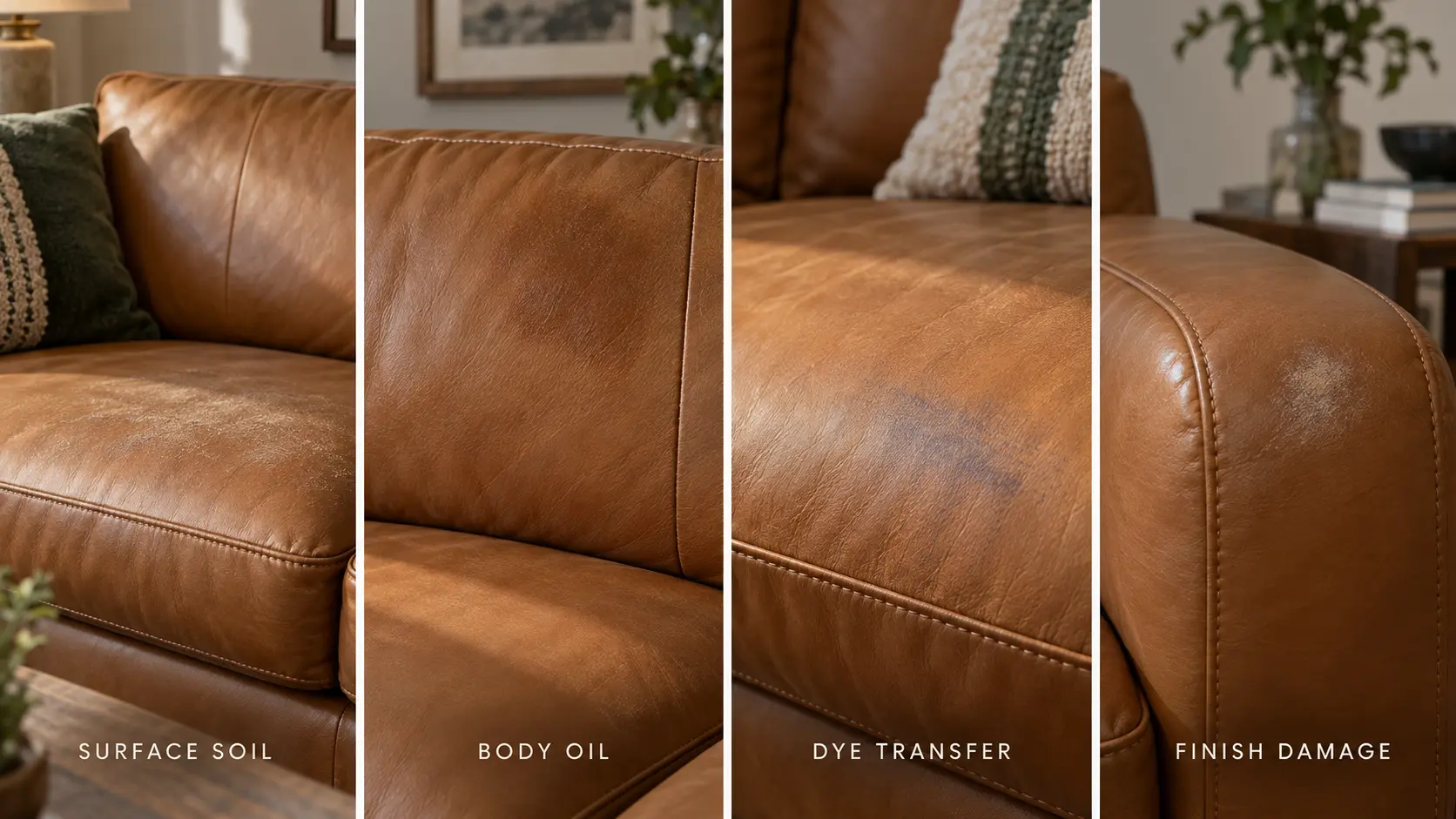
Photograph it in neutral daylight. Note whether it is loose dust, a greasy dark area at the headrest or arms, blue denim transfer, a sticky coating, a pale abrasion or active peeling. Cleaning is appropriate for surface soil—not every visual change.
Extract dry soil first
Remove cushions if the design permits. Vacuum gently with a clean soft brush at low suction, paying attention to seams and piping. Wipe the surface with a dry white microfiber cloth. This may be all an unknown or absorbent leather safely needs.
Assess the approved method in a hidden area
Only if the guide permits cleaning, test its exact product and technique behind or beneath a cushion. Apply cleaner to the cloth—not directly to the couch. Stop if the test creates uneven darkening, tackiness, loss of sheen or color on the cloth. Let the test dry fully before judging it.
Clean minimally, one small section at a time
Lightly wipe without soaking, scrubbing or repeatedly passing over the same area. Follow the maker’s direction for dilution, foam, residue removal and dwell time. Blend to natural panel boundaries so a damp edge does not form in the middle of a cushion.
Natural-dry away from heat
Let the couch dry with ordinary room ventilation. Do not use a hair dryer, heat gun, steam, radiator or direct sun. Keep people and pets off the surface while it is damp so pressure and clothing dye do not transfer.
Notice the dry result before doing more
Compare the dry area with the photo. If it is even, clean and stable, stop. If darkening, stickiness, color loss or a fixed mark remains, diagnose it before repeating treatment. Apply conditioner only when the exact manufacturer and leather type permit it.
Leather couch cleaner comparison: follow permission, not popularity
The table below is a guide to the kind of instruction different manufacturers publish. It is not permission to use one brand’s method on another couch. Recheck the current guide for your exact model and market before cleaning.
| Source | Routine direction | Cleaner/conditioner position | How to use this evidence |
|---|---|---|---|
| American Leather | Conservative cleaning with minimal moisture and natural drying; persistent stains warrant escalation. | Its published process includes mild non-detergent soap in specified circumstances. | Brand-specific example; do not convert it into a universal dish-soap rule. |
| Natuzzi Editions | Separates care by leather group; uses dry nonabrasive cloths, blotting and natural drying. | Directs owners to the relevant Natuzzi product/process for qualifying leather. | Match the actual model/leather group; do not assume all Natuzzi leather is identical. |
| Stressless | Frequent dry dusting or soft-brush vacuuming; warns about dye transfer. | Promotes its approved leather-care system. | Treat frequency and product guidance as maker-specific. |
| Article | Care varies by product; a clean damp cloth may be specified on some product pages. | Persistent issues may require professional care. | Open the exact product page instead of relying on a general brand summary. |
| Cortina Leathers | Instructions vary by leather care code; pure aniline can have much tighter limits than pigmented leather. | Some codes permit limited damp/mild-soap care; others prohibit oils, saddle soap, conditioners or general cleaners. | Best evidence for the finish-first rule; identify the supplied leather code when possible. |
Practical verdict: there is no single “best leather couch cleaner” for every sofa. The best choice is the current product and method approved for the exact upholstery. If that information cannot be found, do not use a stronger household substitute.
If the leather still looks dirty, diagnose the mark first
| What you see | Likely category | Safe next action | Stop condition |
|---|---|---|---|
| Loose dust or light gray surface soil | Removable dry soil | Soft-brush vacuum and dry white cloth; use approved cleaner only if needed. | Color appears on cloth or sheen changes. |
| Dark patches on arms or headrest | Absorbed body/hair oil, not simply surface dirt | Blot fresh oil; seek maker or specialist guidance for established darkening. | Area spreads or becomes uneven with moisture. |
| Blue, black or colored transfer | Denim, ink or dye transfer | Stop rubbing; use only the maker-approved transfer/stain process. | Leather color lifts onto the white cloth. |
| Sticky or overly shiny film | Cleaner/conditioner residue or coating change | Do not add more conditioner; ask the product maker for its residue-removal method. | Tackiness persists when dry or finish softens. |
| Pale line, abrasion or color loss | Pigment/finish wear | Stop cleaning and document it; restoration may require color/finish repair. | Any additional color loss. |
| Peeling, bubbling or flakes | Coating or bonded-material failure | Treat it as damage, not dirt; check warranty and repair/replace options. | Immediate—cleaning cannot bond the layer back together. |
| Odor or moisture returning from seams | Liquid may have reached backing or cushion foam | Professional upholstery assessment. | Do not saturate the surface to reach internal contamination. |
What not to use on a leather couch by default
Internet popularity is not compatibility evidence. Some products may be permitted by a specific manufacturer, but none of the following should be treated as a universal leather-couch solution.
Safer habits
- Start with dry soil removal.
- Use the exact maker-approved product.
- Put cleaner on the cloth, not directly on leather.
- Test and let the area dry fully.
- Stop at color transfer, tackiness or uneven darkening.
Avoid as universal remedies
- Vinegar or acidic DIY mixtures
- Alcohol, acetone, bleach or ammonia
- Disinfecting or household wipes
- Saddle soap without explicit approval
- Cooking oil or heavy conditioner
- Steam cleaners and soaking
- Abrasive pads or hard scrubbing
A diluted soap method is allowed by some furniture makers and leather suppliers, but that does not make every dishwashing liquid safe on every finish. Likewise, “never use water” is too broad: certain protected leathers permit a lightly damp process. The care guide decides.
Should you condition a leather couch after cleaning?
Only if the couch manufacturer approves a conditioner for that exact leather. Conditioner is not a mandatory final step, and more is not better. On an incompatible or coated surface it may sit as a sticky film; on absorbent leather it may darken the color unevenly. Follow the maker’s product, amount, coverage method and schedule—not a universal “every three months” rule.
Leather couch cleaning decision map
When cleaning should stop
Stop immediately if the leather’s color appears on the cloth, the test area remains much darker after drying, the surface becomes sticky, a coating softens, or rubbing enlarges a pale area. Also seek professional guidance for established body-oil saturation, ink, extensive dye transfer, mold, pet urine inside cushions, valuable aniline leather, or any peeling and structural damage.
Take photographs, retain the product label and note exactly what was applied. That record gives the furniture maker, warranty team or leather technician better evidence than another round of cleaning.
FAQs about cleaning a leather couch
What is the safest thing to clean a leather couch with?
A soft vacuum brush and dry white cloth are the safest universal starting tools. For wet cleaning, use only the product and moisture level approved for the exact couch model and leather finish.
Can I clean a leather couch with soap and water?
Sometimes, but not universally. Some protected/pigmented leather guides permit a mild-soap or damp-cloth method, while absorbent aniline leather may have much tighter restrictions. Verify the maker’s instructions first.
Can I use vinegar on a leather couch?
Do not use vinegar as a default leather cleaner. Its compatibility with the couch’s finish, dye and protective coating is unknown unless the manufacturer explicitly approves that method.
How do I know whether my couch is aniline or protected leather?
Check the care label, invoice, swatch, model page or manufacturer. Natural variation or absorbency may offer clues, but appearance and internet water-drop tests do not provide reliable cleaning permission.
Should I condition leather after cleaning it?
Only when the exact manufacturer recommends an approved conditioner for that leather. Conditioning an incompatible or already coated surface can cause darkening, excess shine or sticky residue.
Why did my leather couch darken after cleaning?
The leather may still be damp, may have absorbed moisture or product, or may have reacted to an incompatible treatment. Let it air-dry without heat. If the color remains uneven, stop adding products and seek maker or specialist guidance.
How do I remove body oil from a leather couch?
Fresh oil should be blotted gently. Established dark headrest or arm patches may be absorbed into the leather and are not routine surface dirt. Do not repeatedly wet or scrub them; follow the manufacturer or consult a leather technician.
Can peeling leather be cleaned or conditioned back to normal?
No. Peeling or flaking usually indicates failure of a coating, bonded layer or finish. Cleaning cannot rebond it, and conditioner can make the surface messier. Check warranty, repair and replacement options.
Is the couch performance fabric rather than leather? Use our sunscreen-stain guide for performance-fabric couches; its fabric-code and manufacturer-first method is different from leather care.
Sources and evidence notes
This guide uses manufacturer and leather-supplier instructions to establish compatibility boundaries. Brand-specific methods are examples, not universal approvals.

